 Skip to the content
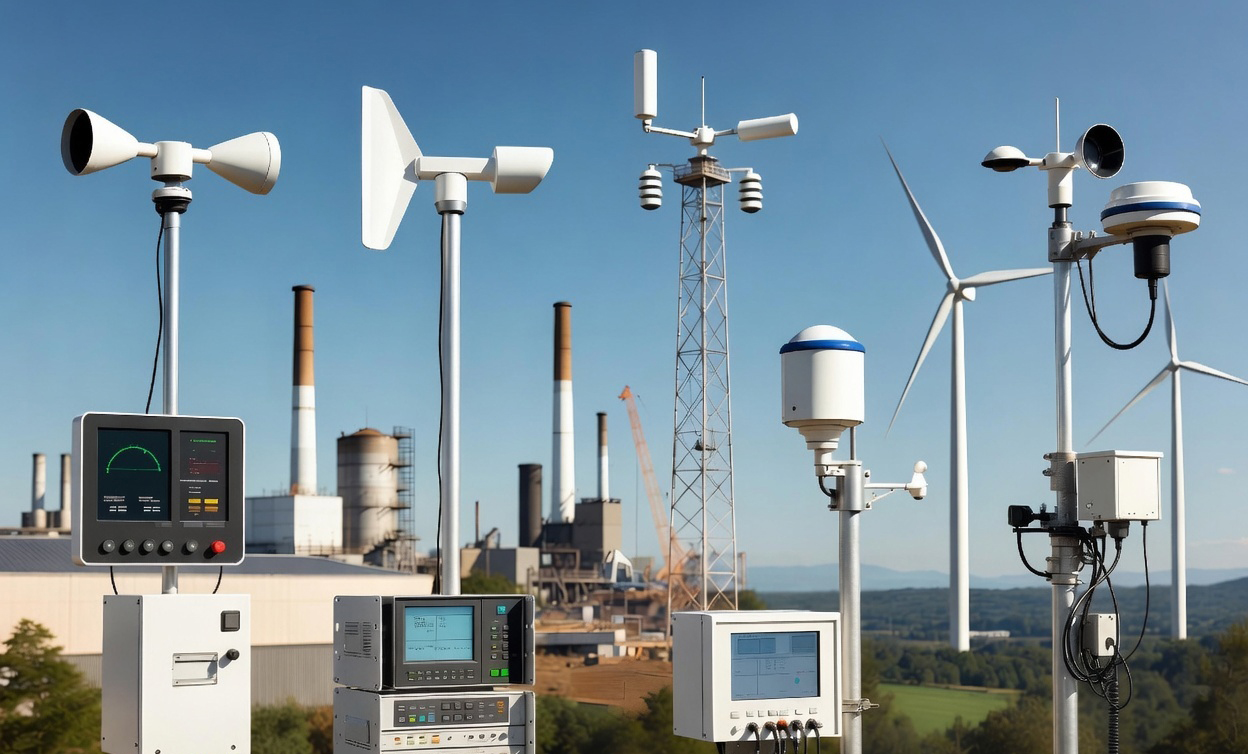
Importance of an Accurate Wind Speed Instrument
As industrial operations become increasingly dependent on accurate environmental data, selecting the right wind speed instrument involves more than comparing measurement ranges or sensor designs. This guide explains how wind speed measuring devices support industrial monitoring, the different types of wind anemometers available, and the factors that influence long-term measurement accuracy and reliability.
We cover how wind speed instruments work, where they are used across industries such as agriculture, renewable energy, building automation, utilities, and infrastructure, and what businesses should evaluate before selecting, installing, and maintaining a wind monitoring solution. The guide also explains how sensor technology, environmental conditions, calibration, and system integration contribute to consistent performance.
The key takeaway: a wind speed instrument is more than just a weather-monitoring device. It is an important source of environmental data that helps organizations improve operational planning, support automation systems, reduce measurement uncertainty, and make more informed decisions in response to changing wind conditions.
Wind influences far more than weather reports. It affects equipment performance, worker safety, agricultural operations, renewable energy production, environmental monitoring, and infrastructure management. Organizations that depend on accurate environmental data need reliable measurements to support daily operations and long-term planning.
A wind speed instrument provides the data required to monitor changing wind conditions with confidence. Whether installed as part of a permanent weather monitoring system or used as a portable measuring device, these instruments help organizations collect consistent environmental data to support operational decisions.
Selecting the right wind speed measuring device involves more than comparing measurement ranges. Environmental conditions, installation location, maintenance requirements, integration capabilities, and long-term reliability all influence overall performance.
This guide explains how wind anemometers work, the available technologies, where they are commonly used, and the factors businesses should consider when selecting a solution for industrial and commercial applications.
What Is a Wind Speed Instrument?
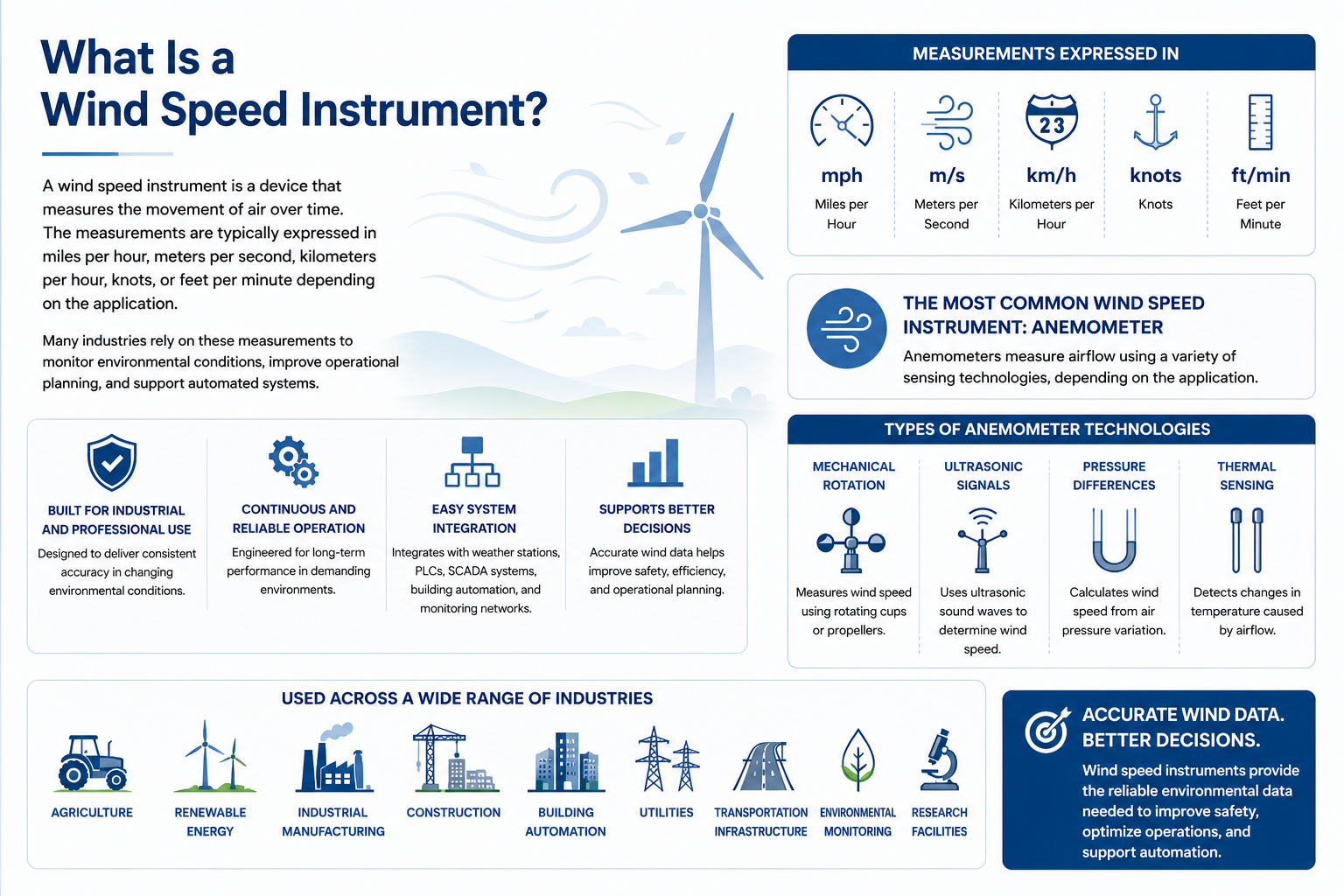
A wind speed instrument is a device that measures the movement of air over time. The measurements are typically expressed in miles per hour, meters per second, kilometres per hour, knots, or feet per minute depending on the application.
Many industries rely on these measurements to monitor environmental conditions, improve operational planning, and support automated systems.
Unlike consumer weather devices designed primarily for personal use, industrial wind speed instruments are built to deliver consistent measurements under changing environmental conditions. Many models operate continuously and integrate directly with weather stations, PLCs, SCADA platforms, building automation systems, or environmental monitoring networks.
The most common wind-speed instrument used today is the anemometer. Different anemometer technologies measure airflow using mechanical rotation, ultrasonic signals, pressure differences, or thermal sensing, depending on the intended application.
Why Accurate Wind Measurement Matters
Rather than treating wind as a general weather condition, many organizations rely on precise wind data to support operational decisions throughout the day.
Accurate measurements help organizations:
- Improve workplace safety during outdoor operations
- Monitor changing environmental conditions
- Support automated control systems
- Optimize renewable energy operations
- Schedule maintenance activities
- Improve agricultural decision-making
- Protect sensitive equipment
- Support environmental compliance programs
- Collect long-term weather data
Even small measurement inaccuracies can influence operational decisions when environmental conditions change rapidly. Selecting an appropriate wind-speed measuring device helps reduce uncertainty and support more reliable monitoring programs.
How Does a Wind Speed Instrument Work?
The answer to how to measure wind speed is not simple, as different technologies measure airflow in different ways. However, every wind speed instrument performs the same basic task: detecting moving air and converting that movement into usable measurement data.
The measurement process generally follows four steps.
Airflow Detection
The sensor detects moving air using either rotating mechanical components or electronic sensing technology. The detection method varies depending on the type of wind anemometer being used.
Measurement Processing
The movement detected by the sensor is converted into an electrical signal or digital output. Internal electronics calculate wind speed using predefined measurement algorithms.
Data Transmission
Many industrial wind speed instruments transmit measurements to weather stations, programmable logic controllers (PLCs), SCADA systems, environmental monitoring platforms, or data loggers for continuous monitoring.
Data Analysis
Operators can review real-time conditions, monitor historical trends, configure automated alerts, or integrate wind measurements into broader environmental monitoring systems that support operational decision-making.
Regardless of the sensing technology, the objective remains the same: delivering consistent environmental data that organizations can rely on when conditions change.
Types of Wind Speed Instruments
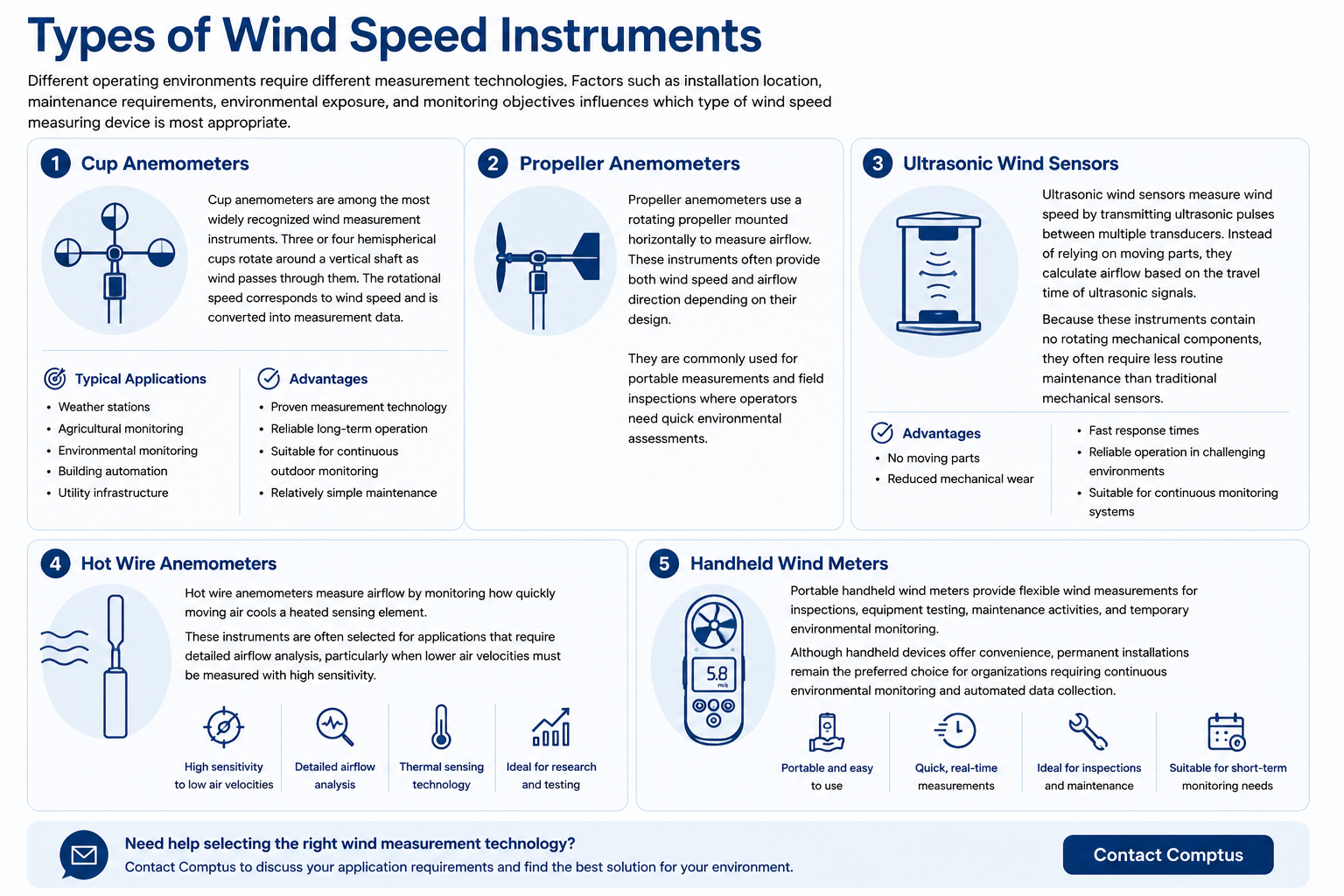
Different operating environments require different measurement technologies. Factors such as installation location, maintenance requirements, environmental exposure, and monitoring objectives influence which type of wind speed measuring device is most appropriate.
Cup Anemometers
Cup anemometers are among the most widely recognized wind measurement instruments. Three or four hemispherical cups rotate around a vertical shaft as wind passes through them. The rotational speed corresponds to wind speed and is converted into measurement data.
Typical Applications
- Weather stations
- Agricultural monitoring
- Environmental monitoring
- Building automation
- Utility infrastructure
Advantages
- Proven measurement technology
- Reliable long-term operation
- Suitable for continuous outdoor monitoring
- Relatively simple maintenance
Propeller Anemometers
Propeller anemometers use a rotating propeller mounted horizontally to measure airflow. These instruments often provide both wind speed and airflow direction depending on their design.
They are commonly used for portable measurements and field inspections where operators need quick environmental assessments.
Ultrasonic Wind Sensors
Ultrasonic wind sensors measure wind speed by transmitting ultrasonic pulses between multiple transducers. Instead of relying on moving parts, they calculate airflow based on the travel time of ultrasonic signals.
Because these instruments contain no rotating mechanical components, they often require less routine maintenance than traditional mechanical sensors.
Advantages
- No moving parts
- Reduced mechanical wear
- Fast response times
- Reliable operation in challenging environments
- Suitable for continuous monitoring systems
Hot Wire Anemometers
Hot wire anemometers measure airflow by monitoring how quickly moving air cools a heated sensing element.
These instruments are often selected for applications requiring detailed airflow analysis, particularly when low air velocities must be measured with high sensitivity.
Handheld Wind Meters
Portable handheld wind meters provide flexible wind measurements for inspections, equipment testing, maintenance activities, and temporary environmental monitoring.
Although handheld devices offer convenience, permanent installations remain the preferred choice for organizations requiring continuous environmental monitoring and automated data collection.
How to Choose the Right Wind Speed Instrument
Selecting a wind speed instrument involves evaluating the operating environment, monitoring objectives, and system requirements, rather than focusing solely on measurement range. The right solution should deliver consistent performance, integrate smoothly with existing monitoring systems, and require maintenance that aligns with operational resources.
Define the Monitoring Purpose
The first consideration is understanding how wind data will be used.
For example, agricultural operations may use wind measurements to support irrigation scheduling or pesticide application planning. Renewable energy facilities monitor wind conditions to optimize turbine performance. Building automation systems use wind data to adjust HVAC operations, while industrial facilities monitor environmental conditions to support worker safety and equipment protection.
Clearly defining the monitoring objective helps narrow the selection process.
Evaluate Environmental Conditions
Operating conditions directly impact sensor performance and longevity.
Consider factors such as:
- Temperature fluctuations
- Heavy rainfall
- Dust and airborne debris
- Ice and snow
- High humidity
- Corrosive industrial environments
- Continuous UV exposure
Selecting an instrument designed for the intended environment helps improve long-term reliability and reduce maintenance requirements.
Consider Measurement Accuracy
Accuracy requirements vary depending on the application.
Environmental research, renewable energy, and automated industrial systems often require highly consistent measurements. On the other hand, temporary field inspections may prioritize portability over continuous precision.
Evaluating published accuracy specifications, response time, and measurement range helps ensure the selected instrument aligns with operational requirements.
Review Integration Requirements
Many organizations integrate wind measurements into broader monitoring platforms.
Before selecting a wind speed measuring device, evaluate compatibility with:
- Weather stations
- PLC systems
- SCADA platforms
- Building automation systems
- Environmental monitoring software
- Data loggers
Choosing an instrument that supports existing infrastructure simplifies installation and future system expansion.
Evaluate Long-Term Maintenance
Maintenance requirements vary by sensor technology.
Mechanical wind anemometers require periodic inspection of rotating components. Ultrasonic sensors eliminate many moving parts that wear over time.
Organizations should evaluate maintenance schedules alongside expected operating conditions to estimate long-term ownership requirements.
Selecting the Right Instrument Starts with the Right Conversation
Choosing a wind speed instrument involves more than comparing specifications. Contact Comptus to discuss measurement requirements, installation considerations, and system integration options.
Applications of Wind Speed Instruments Across Industries
Reliable wind measurements support operational decisions across numerous industries. Although each sector has unique objectives, they all depend on consistent environmental data to improve planning, automation, and operational reliability.
Agriculture
Agricultural operations use wind monitoring to support irrigation planning, crop management, and field activities through reliable weather forecasts.
Reliable wind measurements help operators evaluate changing environmental conditions before performing weather-sensitive tasks.
Renewable Energy
Wind monitoring plays an important role throughout renewable energy operations.
Wind speed data supports site evaluation, turbine monitoring, maintenance scheduling, and long-term performance analysis.
Continuous environmental monitoring also provides valuable historical datasets for operational planning.
Building Automation
Modern building management systems often integrate environmental sensors to improve operational efficiency.
Wind measurements can support automated control strategies for HVAC systems, ventilation equipment, and other building infrastructure that responds to changing outdoor conditions.
Industrial Manufacturing
Manufacturing facilities use environmental monitoring systems to observe outdoor conditions that may influence production processes, material handling, equipment operation, and workplace safety.
Wind data also contributes to broader environmental monitoring programs across industrial facilities.
Construction
Construction activities frequently depend on changing weather conditions.
Wind monitoring helps project teams assess environmental conditions before operating cranes, lifting equipment, and other machinery that are affected by higher wind speeds.
Utilities and Infrastructure
Utilities, transportation infrastructure, and municipal facilities often rely on environmental monitoring systems to support maintenance planning and infrastructure management.
Long-term wind measurements help organizations better understand environmental conditions affecting critical assets throughout the year.
Best Practices for Installing Wind Speed Instruments
Proper installation significantly influences measurement quality. Even highly accurate instruments may produce inconsistent results if installed in locations where nearby objects interfere with airflow.
Following established installation practices helps improve measurement consistency throughout the life of the monitoring system.
Select an Appropriate Installation Location
Install sensors where airflow remains as unobstructed as possible.
Buildings, trees, towers, and nearby equipment can create turbulence that affects measurements.
Whenever practical, position the instrument where it has clear exposure to prevailing wind conditions.
Use Stable Mounting Hardware
A secure mounting structure minimizes unwanted movement caused by vibration or severe weather.
Stable mounting also helps maintain measurement consistency over extended operating periods.
Plan Cable Routing Carefully
For wired systems, protect communication and power cables from physical damage and environmental exposure.
Proper cable management also simplifies future inspections and maintenance.
Verify Sensor Orientation
Some wind monitoring systems require proper directional alignment during installation.
Following the manufacturer’s installation guidance helps ensure that measurements remain accurate after commissioning.
Test System Communication
Before placing the system into regular operation, verify that the instrument communicates correctly with connected weather stations, PLCs, SCADA systems, or data loggers.
Early testing helps identify configuration issues before they affect routine monitoring.
Wind Speed Instrument Comparison
| Feature | Mechanical Wind Anemometer | Ultrasonic Wind Sensor |
| Moving Parts | Yes | No |
| Maintenance Requirements | Periodic inspection | Generally lower routine maintenance |
| Response Time | Fast | Very fast |
| Continuous Monitoring | Yes | Yes |
| Outdoor Applications | Excellent | Excellent |
| Integration with Monitoring Systems | Yes | Yes |
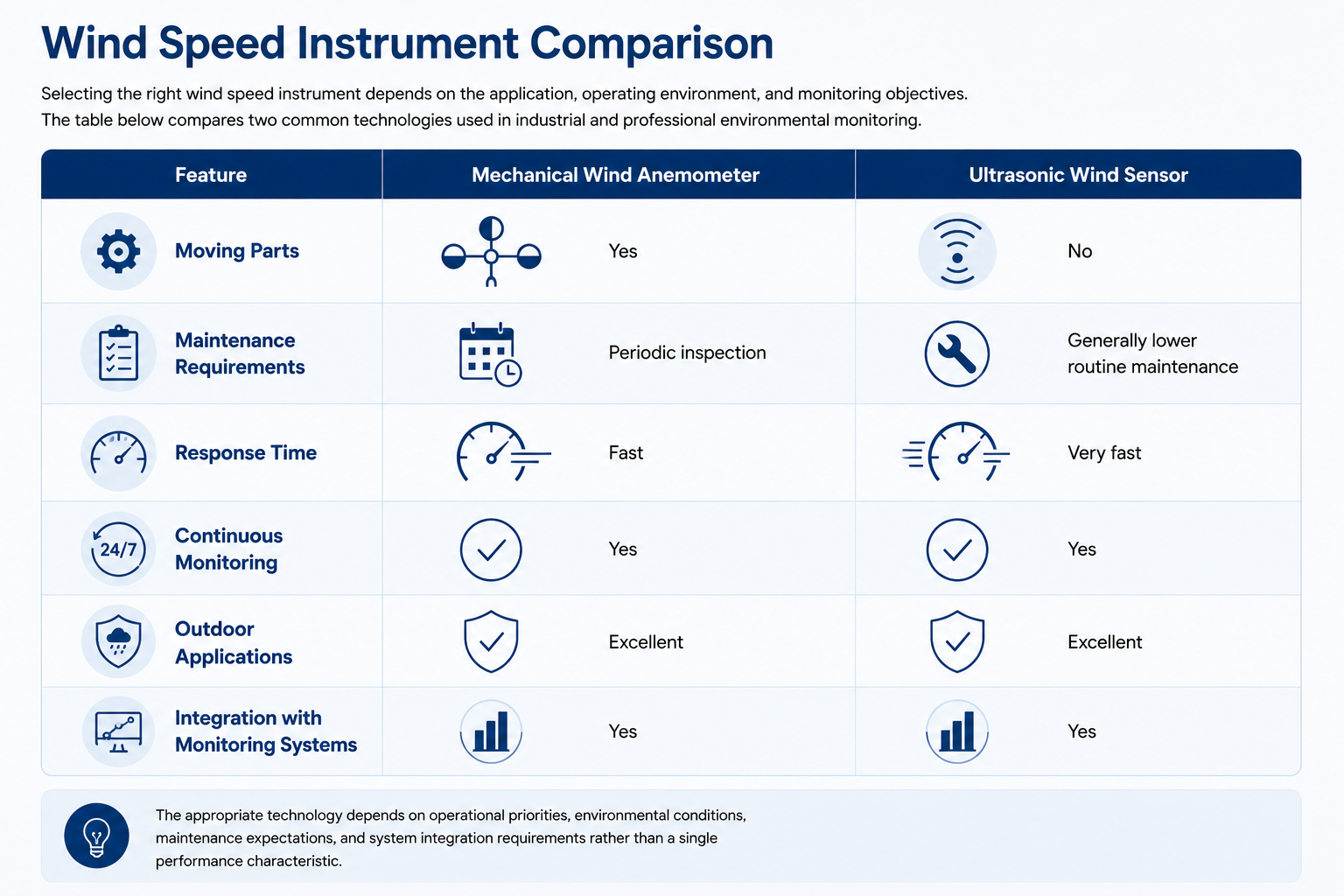
The appropriate technology depends on operational priorities, environmental conditions, maintenance expectations, and system integration requirements rather than a single performance characteristic.
Factors That Affect Wind Speed Measurement Accuracy
Accurate wind measurements depend on more than the quality of the sensor itself. Installation practices, environmental conditions, and ongoing maintenance all influence how consistently a wind speed instrument performs over time. Understanding these variables helps organizations collect data that better supports operational planning and automated monitoring systems.
Installation Location
The location of a wind speed instrument has a significant impact on measurement quality. Nearby buildings, trees, utility poles, and large equipment can disrupt natural airflow, creating turbulence that leads to inconsistent readings.
Installing the instrument in an open area with minimal obstructions helps improve measurement consistency. The selected mounting location should also provide sufficient clearance from structures that may alter wind patterns throughout the day or across different seasons.
Sensor Technology
Different sensing technologies respond differently to environmental conditions. Mechanical wind anemometers measure airflow using rotating components, while ultrasonic sensors rely on sound waves and contain no moving parts.
Each technology offers advantages depending on the application. Evaluating maintenance expectations, environmental exposure, and monitoring objectives helps determine which solution best supports long-term performance.
Environmental Conditions
Wind speed instruments often operate continuously in changing weather. Rain, snow, dust, ice, humidity, and prolonged ultraviolet exposure can all affect long-term performance if the instrument is not designed for those conditions.
Selecting equipment appropriate for the installation environment helps improve reliability while reducing maintenance requirements throughout the instrument’s service life.
Routine Inspection
Even well-designed instruments benefit from periodic inspection. Mounting hardware, sensor surfaces, electrical connections, and communication cables should be checked regularly to identify issues before they affect measurement quality.
Preventive maintenance helps organizations avoid unexpected interruptions and supports dependable environmental monitoring.
Wind Speed Instrument Maintenance and Calibration
Routine maintenance helps preserve measurement consistency and extends the operational life of environmental monitoring equipment. Although maintenance requirements vary depending on sensor design, establishing a regular inspection schedule supports reliable long-term performance.
Keep the Sensor Clean
Outdoor instruments are exposed to dust, pollen, insects, leaves, and other debris that may interfere with normal operation. Periodic cleaning helps prevent buildup that could affect sensor performance.
Cleaning methods should always follow the manufacturer’s recommendations to avoid damaging sensitive components.
Inspect Mounting Hardware
Wind, vibration, and seasonal weather changes can gradually loosen mounting hardware over time. Inspecting brackets, poles, and fasteners helps maintain proper alignment and reduces the risk of measurement errors caused by movement.
Check Electrical Connections
Power cables and communication wiring should be inspected for wear, corrosion, or physical damage. Reliable electrical connections support continuous data transmission between the wind speed instrument and connected monitoring systems.
Perform Periodic Calibration
Calibration verifies that the instrument continues to produce measurements within its intended operating specifications.
The appropriate calibration schedule depends on factors such as:
- Operating environment
- Frequency of use
- Organizational quality procedures
- Manufacturer recommendations
Regular calibration helps maintain confidence in collected environmental data while supporting consistent long-term monitoring.
For organizations that use portable instruments during inspections or fieldwork, calibrating a handheld anemometer is particularly important because frequent transportation and handling can degrade measurement performance over time.
Integrating Wind Speed Instruments with Monitoring Systems
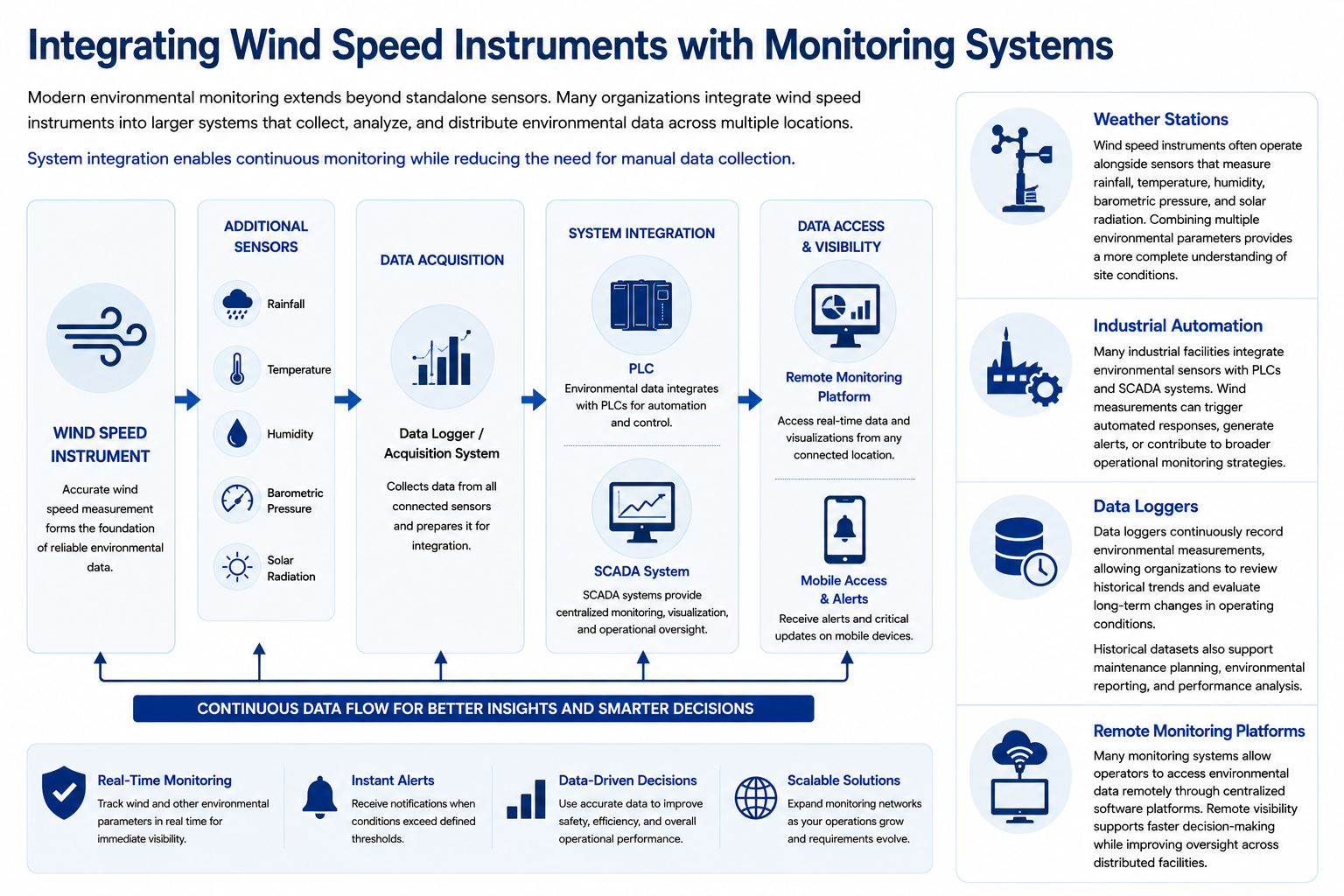
Modern environmental monitoring extends beyond standalone sensors. Many organizations integrate wind speed instruments into larger systems that collect, analyze, and distribute environmental data across multiple locations.
System integration enables continuous monitoring while reducing the need for manual data collection.
Weather Stations
Wind speed instruments often operate alongside sensors that measure rainfall, temperature, humidity, barometric pressure, and solar radiation. Combining multiple environmental parameters provides a more complete understanding of site conditions.
Industrial Automation
Many industrial facilities integrate environmental sensors with PLCs and SCADA systems. Wind measurements can trigger automated responses, generate alerts, or contribute to broader operational monitoring strategies.
Data Loggers
Data loggers continuously record environmental measurements, allowing organizations to review historical trends and evaluate long-term changes in operating conditions.
Historical datasets also support maintenance planning, environmental reporting, and performance analysis.
Remote Monitoring Platforms
Many monitoring systems allow operators to access environmental data remotely through centralized software platforms. Remote visibility enables faster decision-making and improves oversight across distributed facilities.
Common Challenges When Monitoring Wind Speed
Even properly installed systems may encounter operational challenges over time. Recognizing these issues early helps maintain measurement reliability.
Airflow Obstructions
New buildings, vegetation growth, or temporary construction activities may alter airflow around an existing installation. Periodically reviewing the surrounding environment helps maintain measurement quality.
Environmental Wear
Continuous exposure to weather gradually affects outdoor equipment. Routine inspections help identify wear before it impacts system performance.
Delayed Maintenance
Postponing maintenance can allow minor issues to develop into larger operational problems. Following a preventive maintenance schedule supports consistent environmental monitoring.
System Compatibility
When expanding monitoring networks, organizations should confirm that new sensors remain compatible with existing communication protocols, software platforms, and control systems.
Why Organizations Choose Comptus for Wind Monitoring Solutions
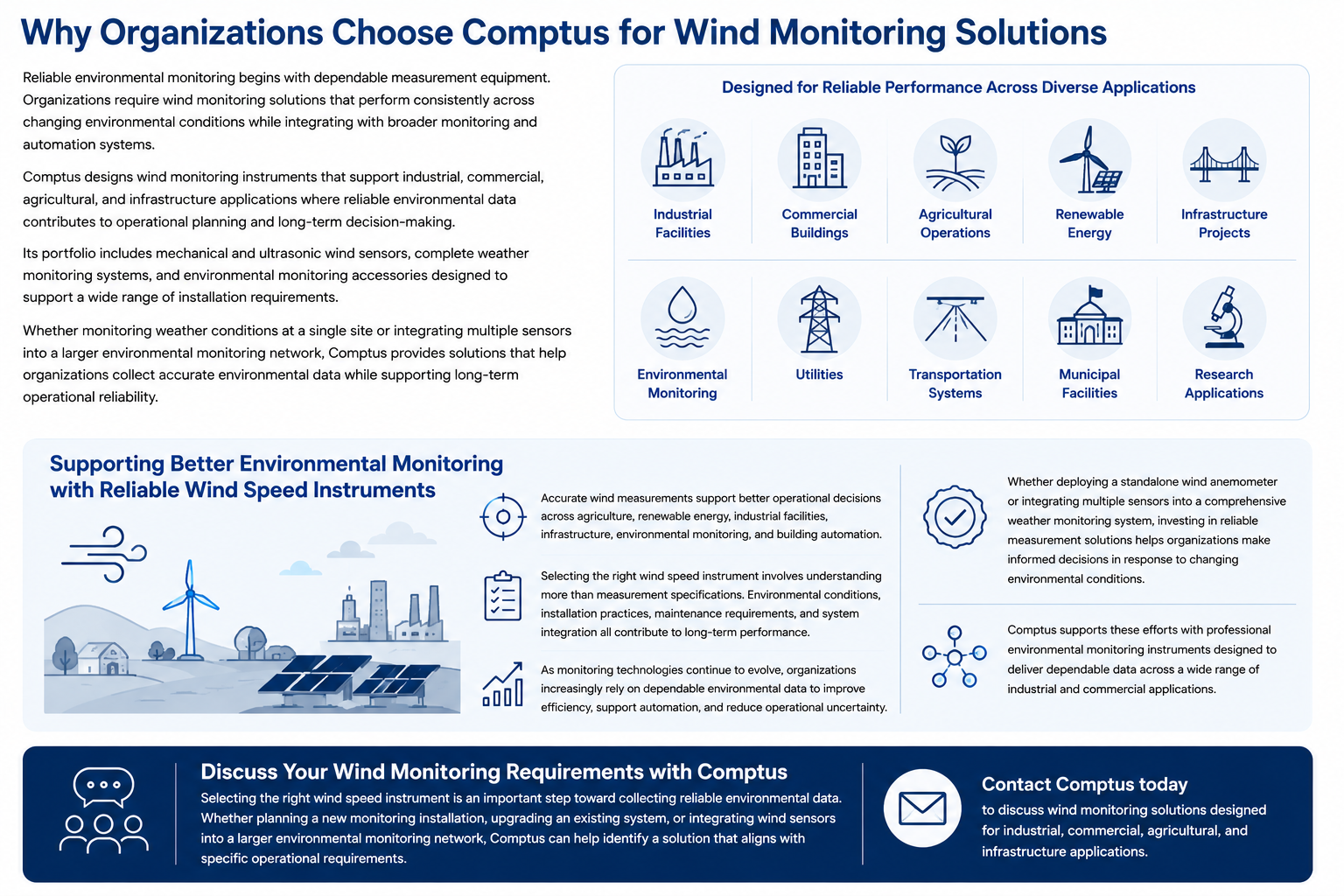
Reliable environmental monitoring begins with dependable measurement equipment. Organizations require wind monitoring solutions that perform consistently across changing environmental conditions while integrating with broader monitoring and automation systems.
Comptus designs wind-monitoring instruments for industrial, commercial, agricultural, and infrastructure applications, where reliable environmental data supports operational planning and long-term decision-making. Its portfolio includes mechanical and ultrasonic wind sensors, complete weather-monitoring systems, and environmental-monitoring accessories designed to support a wide range of installation requirements.
Whether monitoring weather conditions at a single site or integrating multiple sensors into a larger environmental monitoring network, Comptus provides solutions that help organizations collect accurate environmental data while supporting long-term operational reliability.
Supporting Better Environmental Monitoring with Reliable Wind Speed Instruments
Accurate wind measurements support better operational decisions across agriculture, renewable energy, industrial facilities, infrastructure, environmental monitoring, and building automation. Selecting the right wind speed instrument involves understanding more than measurement specifications. Environmental conditions, installation practices, maintenance requirements, and system integration all contribute to long-term performance.
As monitoring technologies continue to evolve, organizations increasingly rely on dependable environmental data to improve efficiency, support automation, and reduce operational uncertainty. Choosing an appropriate wind speed measuring device helps establish a reliable foundation for collecting that data while supporting consistent performance over time.
Whether deploying a standalone wind anemometer or integrating multiple sensors into a comprehensive weather monitoring system, organizations can make informed decisions by investing in reliable measurement solutions in response to changing environmental conditions. Comptus supports these efforts with professional environmental monitoring instruments designed to deliver dependable data across a wide range of industrial and commercial applications.
Discuss Your Wind Monitoring Requirements with Comptus
Selecting the right wind speed instrument is an important step toward collecting reliable environmental data. Whether planning a new monitoring installation, upgrading an existing system, or integrating wind sensors into a larger environmental monitoring network, Comptus can help identify a solution that aligns with specific operational requirements.
Contact Comptus today to discuss wind monitoring solutions designed for industrial, commercial, agricultural, and infrastructure applications.
FAQs
Is a wind anemometer the same as a wind speed instrument?
A wind anemometer is the most common type of wind speed instrument, but the terms are not always interchangeable. A wind speed instrument is any device that measures wind speed, while an anemometer is a specific category of instruments that perform this function using mechanical or electronic sensing technologies.
How do wind speed measuring devices work?
Wind speed measuring devices detect airflow using different sensing methods depending on their design. Mechanical anemometers measure the rotation of cups or propellers, while ultrasonic sensors calculate wind speed by measuring the travel time of ultrasonic signals between transducers. The collected data is converted into a measurable output that can be displayed locally or transmitted to connected monitoring systems.
Which industries use wind speed instruments?
Wind speed instruments are widely used across industries that depend on reliable environmental data. Common applications include agriculture, renewable energy, building automation, industrial manufacturing, construction, utilities, transportation infrastructure, environmental monitoring, and research facilities. Each industry uses wind data to support operational planning, safety, equipment protection, or automated monitoring.
How often should a wind speed instrument be calibrated?
Calibration frequency depends on the operating environment, organizational quality requirements, and manufacturer recommendations. Instruments operating continuously in demanding outdoor conditions may require more frequent verification than those used occasionally for inspections. Regular calibration helps maintain confidence in measurement accuracy throughout the instrument's service life.
What factors affect the accuracy of wind speed measurements?
Several factors influence measurement accuracy, including sensor technology, installation location, nearby obstructions, environmental conditions, mounting stability, routine maintenance, and calibration practices. Proper installation and regular inspections help maintain consistent measurements over time.
Can wind speed instruments integrate with existing monitoring systems?
Yes. Many industrial wind speed instruments are designed to integrate with weather stations, PLCs, SCADA systems, building automation platforms, environmental monitoring software, and data loggers. Integration enables continuous monitoring, centralized data collection, automated alerts, and historical trend analysis.
What should organizations consider when selecting a wind speed instrument?
Organizations should evaluate the intended application, environmental conditions, measurement accuracy requirements, installation location, communication capabilities, maintenance expectations, and compatibility with existing monitoring systems. Selecting an instrument that aligns with operational objectives helps improve long-term performance and measurement reliability.

