Skip to the content

Importance of Reliable Environmental Monitoring Data
As industrial operations depend more heavily on accurate environmental data, building a reliable sensor network involves more than comparing sensor specifications or measurement ranges. This guide explains how environmental sensors support dependable monitoring and the factors that influence data accuracy, consistency, and continuity over time.
We cover how environmental monitoring systems support agriculture, renewable energy, building automation, industrial facilities, utilities, construction, and infrastructure. The guide also explains what organizations should evaluate when selecting, installing, integrating, and maintaining wind sensors, rain gauges, temperature and humidity sensors, solar radiation sensors, and weather stations.
The key takeaway: Reliable environmental data depends on more than the sensor itself. Proper sensor selection, siting, mounting, calibration, maintenance, and system integration help organizations reduce measurement uncertainty, support automation, improve operational planning, and make informed decisions as environmental conditions change.
Environmental monitoring equipment can produce accurate readings on the day it is installed. The greater challenge is maintaining that accuracy through changing weather, continued exposure, equipment wear, and system updates.
Reliable monitoring requires more than a sensor with the right specification. The sensor must suit the measurement, site, mounting location, output requirements, and operating environment. It also needs a dependable path for sending data to a display, controller, data logger, or monitoring platform.
These factors matter because organizations increasingly use environmental data to guide operational decisions. Agricultural teams use rainfall, temperature, humidity, wind, and solar radiation data to manage field operations. Facilities use atmospheric measurements to support ventilation and building controls. Industrial sites monitor wind to inform alarms and automated responses. Utilities and municipalities collect environmental measurements to evaluate conditions and document project performance.
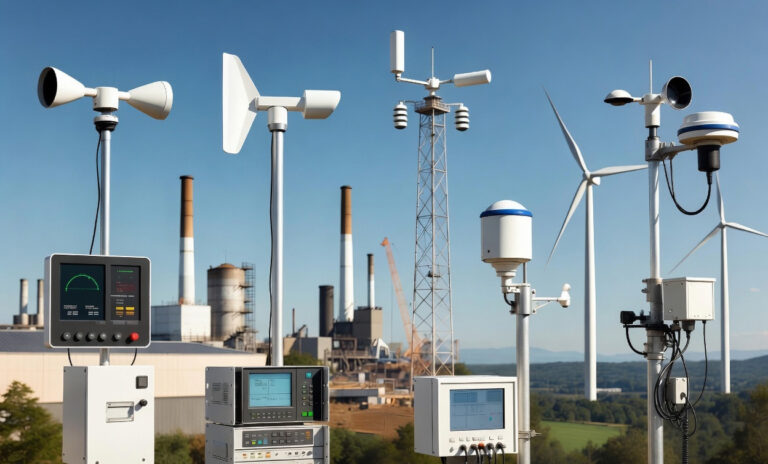
In each case, the value comes from data that remains useful over time. This guide explains what makes environmental sensor and monitoring data reliable, what can weaken it, and how to build a monitoring network around real operational requirements. 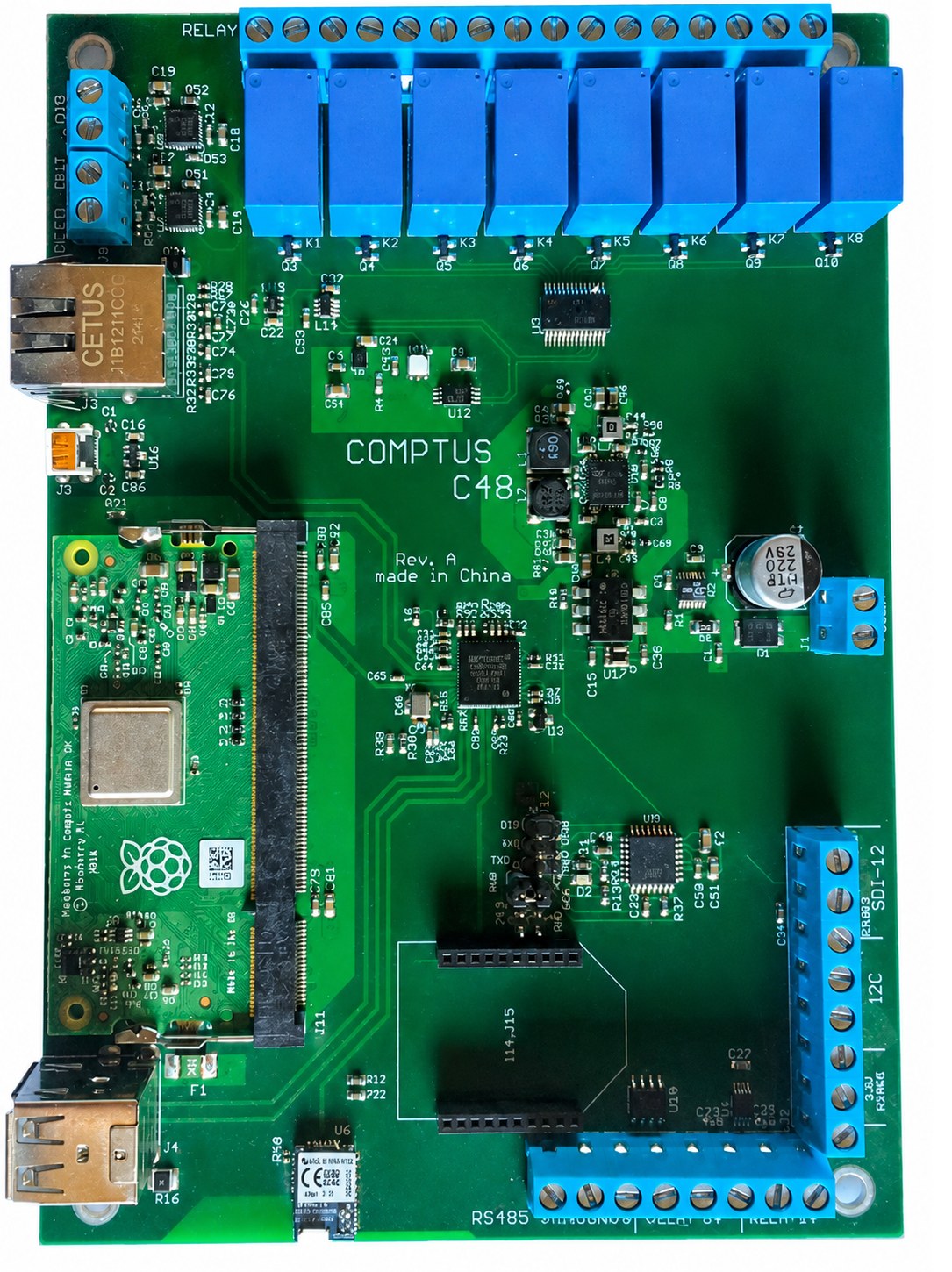
Why Reliable Data Matters More Than Sensor Selection Alone
Accuracy remains an essential product consideration. A sensor must measure within a tolerance that supports the intended use. However, a specification describes performance under defined conditions. It does not account for every influence the sensor will face after installation.
A wind sensor can meet its stated accuracy and still produce unrepresentative readings when a nearby wall disrupts airflow. A rain gauge can operate correctly but collect too little precipitation when a structure blocks part of its opening. A temperature sensor can respond as designed while nearby equipment adds heat to the measurement area.
The sensor has not necessarily failed in these situations. The monitoring system has failed to account for the site.
Reliability also becomes harder to manage as a network grows. One sensor is relatively easy to inspect. A network spread across a facility, field, construction site, or group of remote locations requires a consistent process. Teams need to know where each sensor is installed, what it measures, how it sends data, and when it was last inspected.
Automation increases the importance of that process. A person may notice when a gauge shows an unlikely value. A controller normally responds to the value it receives. An inaccurate input can therefore create an unsuitable alarm, control action, or operating decision.
Reliable monitoring reduces that risk. It gives operators greater confidence that the reported conditions reflect the site rather than a placement issue, maintenance problem, or communication failure.
Why Environmental Data Quality Is Receiving More Attention
Several developments are increasing the value of structured monitoring practices.
Infrastructure Programs Require Documented Project Information
Public infrastructure programs often require recipients and administrators to document how assistance is used. Specific performance and monitoring requirements vary by program, state, project, and funding agreement.
Where a project uses rainfall, flow, or weather observations to evaluate performance, reliable environmental data can strengthen the supporting record. It gives project teams consistent information to review, rather than leaving them to explain missing or questionable measurements.
Condition Monitoring Follows More Structured Methods
ISO published ISO 16079 1:2026 for condition monitoring and diagnostics of wind turbines. The standard provides general guidance for choosing methods used to detect and diagnose failure modes in wind power plant components. It does not specify environmental sensors or information technology systems.
The standard is relevant as an example of the broader movement toward structured, documented monitoring. These developments also reflect a wider principle. Monitoring data becomes more valuable when an organization can explain how it was collected and why it represents the conditions being evaluated.
What Makes Environmental Monitoring Data Reliable
Four qualities determine whether environmental data can support practical decisions.
Accuracy
Accuracy describes how closely a reading matches the actual condition. The required accuracy depends on the application. General weather observation may not need the same tolerance as an industrial control process.
Buyers should review the measurement range, resolution, accuracy, starting threshold, and environmental limits before selecting a sensor. The most precise option is not always the most appropriate. The goal is to meet the operating requirement without adding unnecessary complexity.
Consistency
Consistency means the sensor produces comparable readings under comparable conditions. A gradual shift may indicate drift, contamination, wear, a mounting change, or another site influence.
Trend review can help teams identify changes that a single spot check might miss. Comparisons with nearby sensors or a reference instrument may also reveal readings that deserve inspection.
Continuity
Continuity describes whether the monitoring record contains the required readings at the expected times. Power interruptions, loose connections, damaged cables, communication errors, and logger problems can create gaps even when the sensor remains functional.
Not every gap carries the same consequence. The effect depends on when the gap occurs and how the data is used. Teams should identify the measurement points where lost data would interrupt an alarm, control process, operational review, or project record.
Traceability
Traceability allows an organization to understand where a reading came from and what happened to the equipment over time. Useful records may include the sensor model, serial number, location, installation date, output type, inspection history, and calibration information.
Traceability supports troubleshooting. It also helps teams compare measurements across locations and understand whether changes came from the environment or the equipment.
Common Causes of Unreliable Environmental Sensor Data
Most monitoring problems come from a manageable group of causes. Addressing them early can prevent long gaps and repeated maintenance visits.
Warning signs often appear before a monitoring system stops working completely. Gradual drift, unexplained differences between nearby sensors, missing records, and inactive alarms can all indicate a developing reliability problem. Review these seven signs an environmental monitoring network is feeding bad data to identify issues before they affect another operational decision.
Incorrect Sensor Selection
A sensor may be accurate but unsuitable for the required range, response time, output, or exposure. This often happens when teams compare only the parameter being measured.
Selection should account for the full application. A wind sensor for a control system may need a specific analog output. A remote weather station may require several measurements through one communication connection. A precipitation application may need quantitative rainfall measurement rather than simple rain or snow detection.
Poor Siting
Nearby objects can change the condition a sensor measures. Buildings, trees, walls, roof edges, exhausts, reflective surfaces, and operating equipment may all affect readings.
Wind sensors need suitable clearance from obstructions that create turbulence. Rain gauges need an open collection area. Temperature and humidity sensors need representative airflow and protection from unsuitable radiant heat. Solar radiation sensors need a position that avoids unintended shade.
Teams should evaluate siting before choosing cable routes and mounting hardware. Moving a sensor after commissioning can require additional labor and may make earlier readings difficult to compare with later data.
Mounting Changes
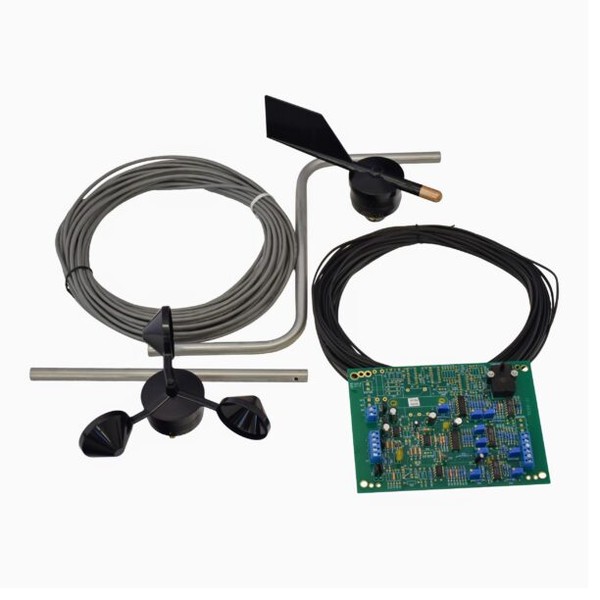
A sensor can shift because of vibration, impact, loose hardware, or severe weather. Even a small change in orientation may affect a wind direction sensor or solar radiation measurement.
Inspection should include the mount, mast, fasteners, alignment, cable support, and surrounding clearance. The sensor body is only one part of the installation.
Contamination and Environmental Exposure
Dust, debris, moisture, ice, corrosion, and biological material can affect sensor performance. Different sensing technologies respond to these conditions in different ways.
The monitoring plan should match inspection and cleaning practices to the site. An agricultural yard may create more dust than a rooftop installation. A location with freezing weather may require a sensor configuration designed for cold conditions. An industrial site may require an enclosure that protects connections from dust, water, or corrosion.
Calibration Drift
Some sensors can change gradually as components age or operating conditions affect them. The readings may still look reasonable, which makes gradual drift difficult to identify through observation alone.
Follow the product documentation and application requirements when setting calibration or verification intervals. Record the result of each check. If the reading falls outside the accepted tolerance, investigate the sensor, installation, and signal path before returning it to service.
Power and Communication Failures
Sensors depend on stable power, suitable wiring, compatible signals, and functioning data collection equipment. A failed power supply or damaged connection can appear to be a sensor problem.
Troubleshooting should follow the complete signal path. Check the power source, terminals, cable, surge protection, transmitter, logger, network connection, and destination system. This approach reduces unnecessary sensor replacement.
Missing Redundancy at Critical Points
A single sensor may be appropriate for many general monitoring applications. Critical measurement points require more careful evaluation.
If losing one reading would prevent an alarm, interrupt a control process, or remove an essential record, consider a backup sensor, secondary power source, alternate communication route, or local data storage. Redundancy should reflect the consequence of failure rather than a blanket rule for every device.
The right architecture depends on the importance of the measurement, the consequences of losing it, and the maintenance resources available. This comparison of redundant sensor arrays and single-point monitoring explains how to evaluate reliability, cost, maintenance, and continuity for a specific application.
| Reliability issue | Common warning sign | Practical response |
| Incorrect sensor selection | The range, response, or output does not support the application | Reconfirm the measurement and integration requirements |
| Poor siting | Readings differ consistently from representative nearby conditions | Review clearance, exposure, orientation, and local influences |
| Mounting changes | Directional or solar readings change after vibration or severe weather | Inspect alignment, fasteners, mast, and cable support |
| Contamination | Response becomes slow, or values change after dust, ice, or debris accumulates | Follow approved inspection and cleaning procedures |
| Calibration drift | Readings shift gradually without a matching site change | Compare with a suitable reference and follow calibration guidance |
| Data gaps | Timestamps are missing, or values remain unchanged unexpectedly | Inspect power, wiring, communication, and logger records |
| Single point of failure | One device loss removes an essential measurement | Add targeted redundancy where the operational consequence justifies it |
An Eight Step Framework for Reliable Environmental Monitoring
A dependable monitoring architecture starts with the decision the data must support. It then works backward through measurement, installation, integration, and maintenance requirements.
1. Define the Operational Decision
Start by asking what the organization will do with the measurement. It may display local conditions, trigger an alarm, control equipment, document a project, or support a longer-term trend analysis.
This decision determines how accurate, frequent, and continuous the readings need to be. It also identifies the consequence of missing or incorrect data.
2. Define the Required Measurement
Specify the environmental parameter, expected range, required resolution, and suitable response time. Determine whether the application needs wind speed, wind direction, rainfall amount, precipitation detection, temperature, humidity, pressure, solar radiation, or several parameters.
Avoid using a broad product category as the complete requirement. A rain and snow detector serves a different purpose from a tipping bucket rain gauge. A handheld wind meter serves a different purpose from a permanently installed wind transmitter.
3. Assess the Site and Exposure
Document the expected temperature, moisture, dust, ice, vibration, corrosion exposure, and physical access. Review nearby structures and equipment that could influence measurements.
This assessment helps determine the sensing technology, enclosure, mounting method, cable protection, and maintenance access the site requires.
4. Choose the Sensing Technology
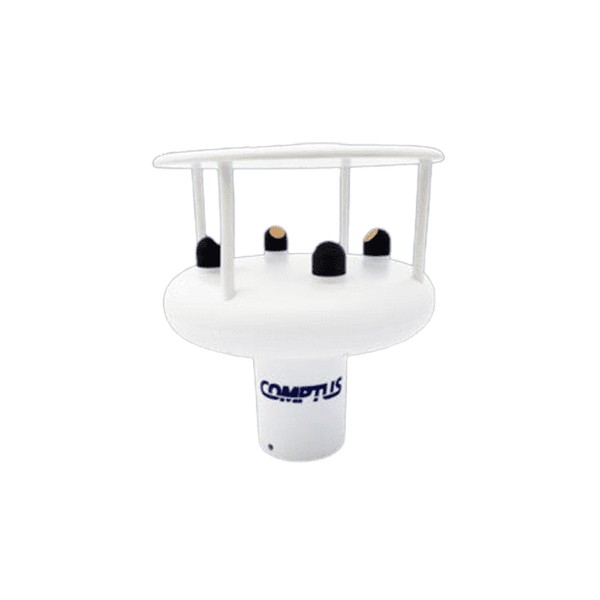
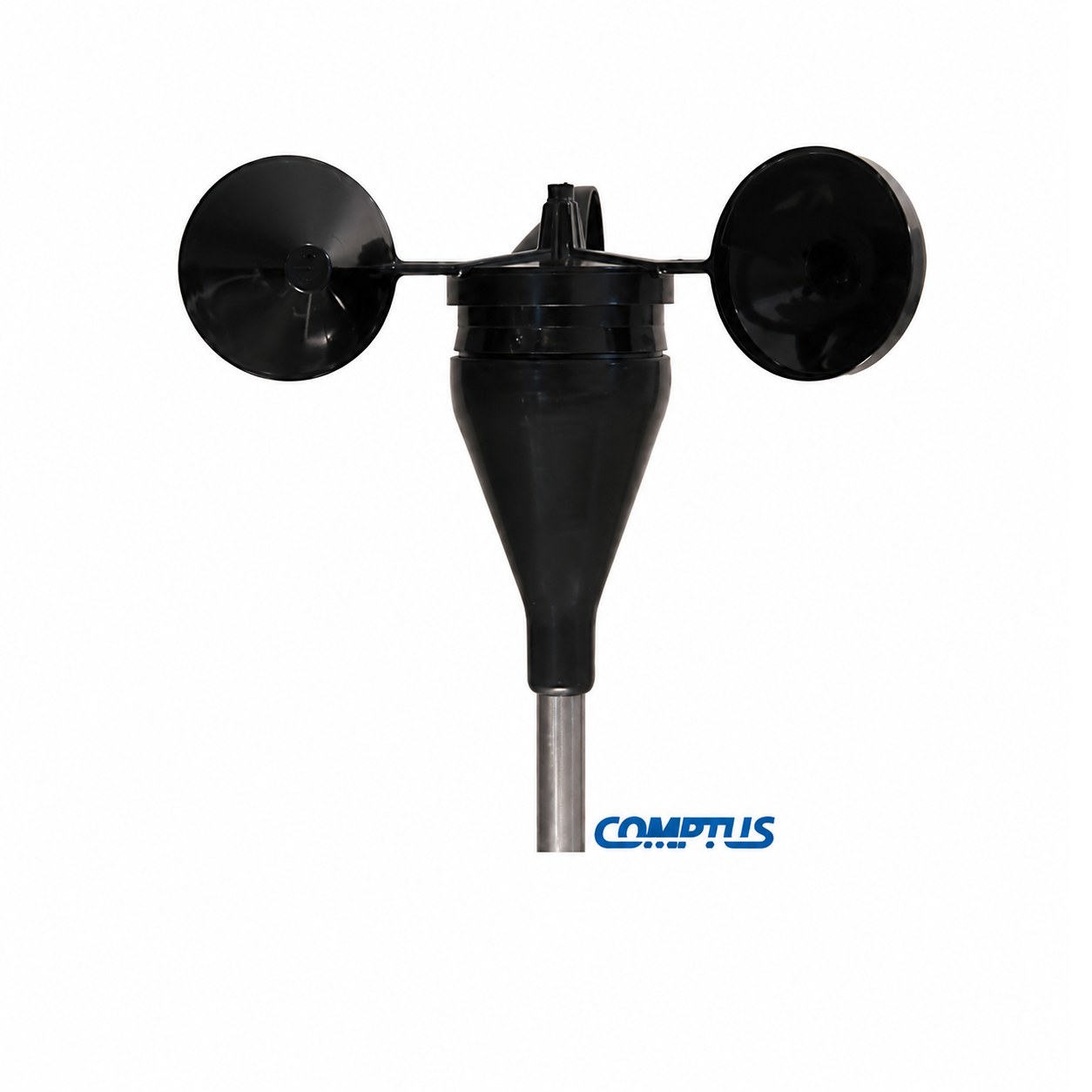
Mechanical and ultrasonic wind sensors each suit different requirements. Mechanical anemometers offer a familiar approach for many wind monitoring applications. Ultrasonic sensors measure wind without moving sensing components and can support applications that favor an integrated electronic design.
Precipitation options also differ. Tipping bucket rain gauges measure accumulated rainfall through mechanical collection. Radar precipitation sensors detect precipitation electronically. Rain and snow sensors can provide a switch signal for controls without serving as a quantitative rain gauge.
Select technology according to the measurement goal, site, integration needs, and approved maintenance plan.
5. Confirm Output and Power Compatibility
The sensor must communicate with the equipment that will use its data. Common options across Comptus products include pulse, voltage, current, relay, and other model-specific outputs.
Confirm the required signal before ordering. Also verify supply voltage, cable distance, input scaling, communication protocol, and enclosure requirements. A sensor with the wrong output can add avoidable conversion work even when it measures the correct parameter.
6. Plan Siting and Mounting
Use product guidance and application requirements to choose a representative location. Confirm the mast, bracket, crossarm, fasteners, orientation, and cable route before installation.
Record the final position. Photographs and site notes can make future inspections easier. They also provide a reference if construction, vegetation, or nearby equipment later changes the measurement environment.
7. Establish Verification and Maintenance Procedures
Create an equipment record for every important measurement point. Include inspection tasks, cleaning methods, calibration or verification guidance, responsible personnel, and acceptable tolerances.
Base the schedule on the product documentation and actual site exposure. Review the schedule after severe weather, construction activity, unexplained readings, or repeated communication faults.
8. Monitor the Data Path
Review whether readings reach the intended display, controller, logger, or platform at the expected interval. Configure alerts for missing values, values outside credible limits, and communication failures where the receiving system supports them.
Data review completes the framework. Without it, a physical inspection may show that the sensor looks intact while a signal or logging issue continues to create gaps.
Matching Comptus Sensors to Monitoring Requirements
Comptus offers environmental sensors and systems for wind, precipitation, atmospheric, and solar measurements. The right product category depends on what the organization needs to measure and how it will use the data.
| Monitoring Requirement | Comptus Product Category | Primary Selection Considerations |
| Continuous wind speed | Anemometers or ultrasonic wind sensors | Measurement range, starting threshold, moving components, output, heating, and exposure |
| Wind direction | Wind vanes or combined ultrasonic sensors | Orientation, dead band, resolution, mount, and output |
| Control system wind input | Wind speed transmitters | Required current or voltage signal, supply power, enclosure, and cable distance |
| Accumulated rainfall | Tipping bucket rain gauges | Collection area, calibration, mounting level, drainage, and debris exposure |
| Rain or snow detection | Rain and snow sensors | Detection rather than accumulation, relay behavior, heating, and control logic |
| Air temperature and humidity | Temperature and humidity transmitters | Radiation protection, airflow, output, supply voltage, and environmental range |
| Solar radiation | Pyranometers and solar radiation sensors | Measurement range, level mounting, shading, cleaning, and output |
| Several weather parameters | Automatic weather stations | Required measurements, protocol, mounting, power, heating, and system integration |
Some applications may also require alarms or controllers. A wind alarm system can receive sensor input and activate outputs at configured thresholds. The correct configuration depends on the number of set points, required actions, power, enclosure, and connected equipment.
Comptus provides product details and technical specifications with model-level details. Buyers should confirm the exact configuration before using a sensor in a control, safety, or compliance-related process.
Reliability Considerations by Application
The framework remains consistent across industries, but each application places different pressure on the monitoring system.
Agriculture
Agricultural operations may monitor rainfall, temperature, humidity, wind, and solar radiation across large or exposed sites. Dust, vegetation growth, equipment movement, and seasonal weather can change the installation environment.
Teams should preserve clearance around sensors, inspect mounts after field activity, and review data continuity during critical growing periods. The required sensor mix depends on whether the data supports irrigation, spraying, frost response, greenhouse controls, or general weather records.
Building Automation and Industrial HVAC
Building and HVAC systems may use outdoor temperature and humidity measurements as control inputs. Sensor placement should represent outdoor conditions without interference from exhausts, roof surfaces, direct heat sources, or sheltered air pockets.
Output compatibility is especially important. Confirm that the transmitter and receiving controller use the same signal type and scaling. Teams should also define how the control system responds when a sensor signal is missing or outside an acceptable range.
Industrial Facilities
Industrial sites may use wind, precipitation, temperature, or humidity data for alarms, process decisions, ventilation, or site operations. Dust, vibration, electrical equipment, and long cable routes can affect the system.
Choose enclosures, signal outputs, surge protection, and mounting hardware that fit the installation. Document the complete signal path so maintenance teams can distinguish a sensing problem from a wiring, power, transmitter, or controller issue.
Construction and Infrastructure
Construction teams may monitor wind near cranes, elevated work, temporary structures, or other exposed operations. Municipalities and utilities may collect rainfall and weather data for infrastructure review and stormwater management.
The monitoring plan should reflect the decision being made. A local wind alarm requires clear threshold logic and dependable sensor input. A rainfall record requires suitable gauge placement, regular inspection, and continuous logging during relevant events.
Renewable Energy
Renewable energy applications may use wind and solar radiation measurements for site observation, equipment monitoring, and performance analysis. Sensor placement, orientation, and comparable installation practices become important when teams review measurements across several locations.
Organizations should identify the applicable engineering, contractual, and regulatory requirements before selecting equipment. No single environmental sensor automatically establishes compliance with a wind energy or condition monitoring standard.
What Reliable Environmental Data Enables
Reliable data does not guarantee a particular operational result. It removes uncertainty about the measurement input and gives teams a stronger basis for action.
More Dependable Automation
A controller can respond appropriately only when the input represents the actual condition. Reliable sensors, compatible signals, and data quality checks reduce the chance that an installation problem will create an unsuitable response.
Faster Troubleshooting
Equipment records and visible data trends help teams narrow the cause of a problem. They can review the sensor, location, mount, power, wiring, transmitter, logger, and destination system in a logical order.
Better Maintenance Planning
Inspection history reveals recurring exposure or installation problems. Teams can adjust cleaning, mounting, cable protection, or verification procedures based on site evidence.
Stronger Project Records
Continuous and traceable measurements provide a clearer record for internal reviews, engineering analysis, and project reporting. The specific documentation required will depend on the organization, program, contract, and jurisdiction.
What to Look for in an Environmental Sensor Manufacturer
A product specification is important, but it should not be the only evaluation tool. Consider how well the manufacturer supports the complete application.
Relevant Measurement Options
The supplier should offer technology suited to the required parameter and purpose. Comptus provides products for wind speed, wind direction, rainfall, precipitation detection, temperature, humidity, pressure, solar radiation, and combined weather monitoring.
Clear Technical Specifications
Review range, accuracy, resolution, output, power, environmental limits, dimensions, materials, and mounting requirements. Specifications should help the buyer confirm compatibility before installation.
Configuration and Integration Support
Industrial monitoring often requires a particular analog signal, communication protocol, power supply, or enclosure. Confirm that the selected configuration works with the existing controller, display, data logger, or monitoring platform.
Suitable Mounting and Accessories
Mounting affects measurement quality. Evaluate available masts, crossarms, brackets, enclosures, cables, transmitters, and surge protection as part of the sensor system.
Application Focused Guidance
The supplier should ask what the sensor will measure, where it will operate, and what equipment will receive the signal. These questions reduce the risk of choosing an inaccurate product that does not fit the installation.
Build a Monitoring Network Around the Data Needed
A reliable environmental monitoring network starts with a clear operational requirement. From there, every choice should support the quality and continuity of the final data.
Define the decision first. Select the required measurement and range. Evaluate the site. Choose suitable sensing technology. Confirm output compatibility. Plan the mounting location. Establish inspection procedures. Then monitor the complete data path.
This process helps prevent a common problem. An organization can purchase an accurate sensor but still receive unreliable data because the installation, integration, or maintenance plan does not support it.
Comptus designs and manufactures environmental sensors, transmitters, weather stations, alarms, and related equipment for industrial, agricultural, building automation, renewable energy, construction, and infrastructure applications. The available configurations support multiple measurements and system outputs.
If an organization is planning a new monitoring network or replacing equipment that no longer meets site requirements, Comptus can help identify a suitable sensor and configuration. Contact Comptus to discuss the measurement, environment, output, power, and mounting requirements.
What is the difference between sensor accuracy and reliability?
Accuracy describes how closely a reading matches the true condition. Reliability describes whether the complete monitoring system continues producing useful readings over time. A sensor can meet its accuracy specification but still provide unrepresentative data when installed in the wrong location.
How often should environmental sensors be calibrated?
Calibration and verification intervals depend on the sensor type, product guidance, application requirements, and site exposure. Organizations should use a documented schedule and investigate readings that fall outside the accepted tolerance.
Where should an environmental sensor be installed?
Install the sensor where it can measure representative conditions without unsuitable interference from buildings, trees, exhausts, roof surfaces, shade, or operating equipment. Follow the product instructions and any application-specific siting requirements.
When does a monitoring network need redundancy?
Consider redundancy when losing one sensor, power source, or communication path would interrupt an important alarm, control process, operational decision, or project record. Apply it based on the consequences of failure rather than adding duplicate equipment everywhere.
How do data loggers support environmental monitoring reliability?
Data loggers capture and timestamp sensor readings. This record helps teams identify missing data, unusual values, and changes over time. Reliability still depends on compatible signals, stable power, correct configuration, and a functioning communication path.
Can one weather station measure several environmental conditions?
Yes. A combined automatic weather station can measure several parameters through one unit. Available Comptus configurations can include wind speed, wind direction, pressure, temperature, humidity, rainfall, and solar radiation. Confirm the measurements and outputs included with the selected model.
Do environmental sensors require maintenance?
Maintenance needs vary by technology, installation, and exposure. Common tasks include inspecting mounts, clearing debris, checking alignment, reviewing cables and connections, and following model-specific calibration or verification guidance.