Skip to the content
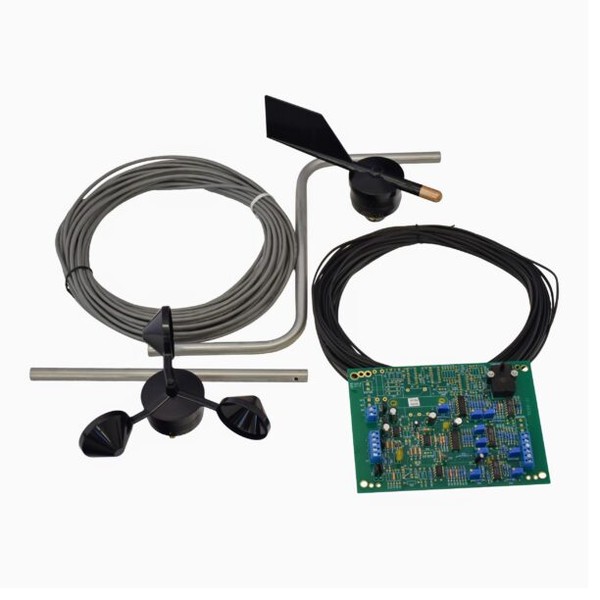
Environmental data increasingly informs alarms, automated controls, and project reporting. Instead of asking whether a backup would be useful, organizations should ask what happens if one sensor fails at the wrong time.
The answer depends on the application. A single sensor may be sufficient for general observation. A critical process may require cross-validation, continuous coverage, or sensor network failover. Comparing the two approaches helps teams invest according to operational risk.
The Two Approaches, Defined
Single-point monitoring uses one sensor to measure a condition at a defined location. The arrangement is simple, economical, and appropriate when a temporary data gap would have limited consequences.
A redundant sensor array uses two or more sensors to measure the same condition or provide overlapping coverage. They may validate one another or allow a backup to take over.
Redundancy can also apply beyond the sensor. A resilient monitoring architecture may include backup power, another communication route, or local storage when the main connection fails.
Comparing Reliability
One failure can remove an entire single-point measurement. Gradual drift is difficult to detect because the sensor may continue reporting believable values.
Redundant arrays improve monitoring architecture reliability through comparison. Disagreement between sensors can trigger a review. Redundancy can also preserve continuity during maintenance or replacement.
However, more sensors do not automatically create reliable data. Poor siting, shared power failures, incorrect configuration, or identical maintenance lapses can affect every sensor in the array. The design must address common failure points as well as sensor failure.
Comparing Cost
Single-point monitoring usually requires less hardware, wiring, mounting, configuration, and commissioning. It can be the practical choice when the information supports general observation rather than an essential process.
A redundant array increases initial equipment and installation costs. It may also require more controller inputs, data storage, software logic, and alarm configuration.
The comparison should include the consequence of failure. Critical infrastructure sensor redundancy becomes easier to justify when bad data could interrupt operations, delay a response, or weaken an important record.
Comparing Maintenance and Calibration Burden
Every sensor adds inspection, verification, documentation, and possible calibration work. Teams must also investigate disagreements between readings.
Single-point systems reduce this workload, but they concentrate risk in one device and signal path. A simpler system is not necessarily less costly if it requires an urgent site visit after an unexpected failure.
The practical comparison is the planned maintenance burden versus the consequence of a single point of failure.
Where Redundancy Actually Pays Off
Redundancy is most valuable when data loss would affect an alarm, control action, maintenance decision, or required record. Examples include wind controls, stormwater project evaluation, and critical facility monitoring.
Applicable standards, permits, contracts, and reporting requirements vary. Neither wind turbine condition monitoring nor stormwater work creates one universal redundancy rule. Organizations should confirm the requirements for the specific project and jurisdiction.
Recreational weather observation, portable spot checks, and general monitoring may not justify duplicate equipment when a short outage creates limited risk.
A Practical Framework for Deciding
Before choosing a redundant sensor array vs. single-point monitoring, ask:
- What decision depends on the measurement?
- What happens if the reading is wrong or unavailable?
- How quickly must the system detect a failure?
- Can operations continue during maintenance?
- Could one power, wiring, or communication problem disable every sensor?
- What maintenance and documentation can the team support?
The consequence of bad or missing data should determine the redundancy level. Single-point monitoring remains appropriate when the risk is limited. Redundant sensing, power, communication, or storage becomes more valuable as the cost of failure increases.
The environmental monitoring reliability framework provides a broader method for evaluating sensor selection, siting, calibration, integration, and network continuity. Contact Comptus to discuss sensor and monitoring configurations for a specific application.