Skip to the content
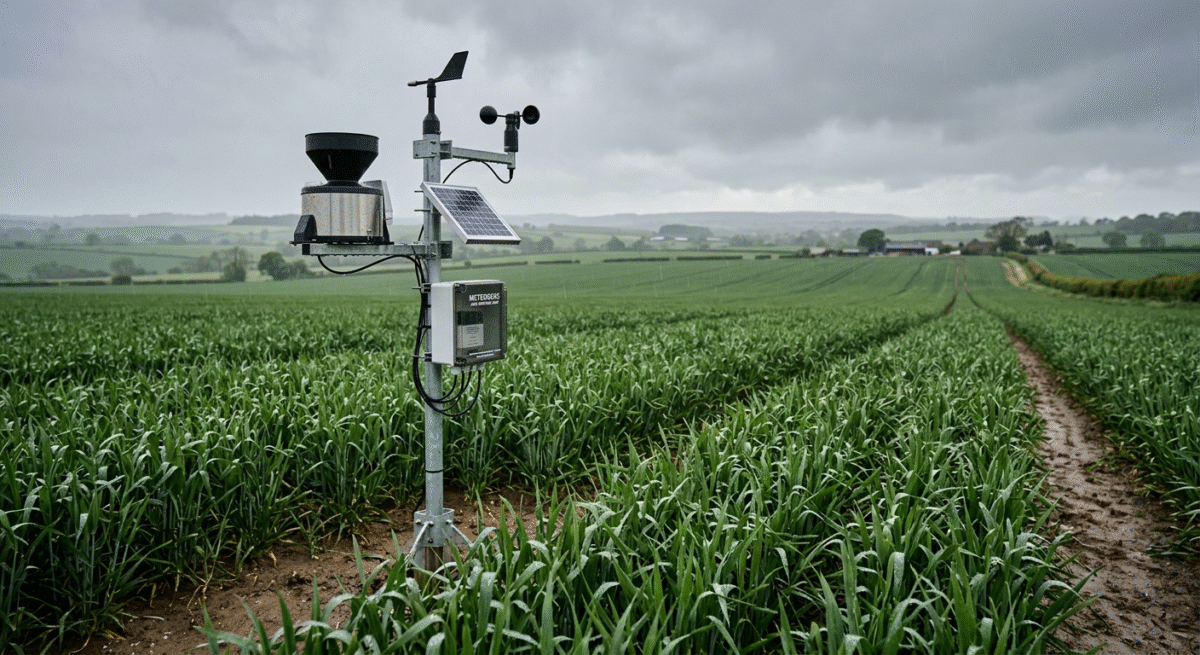
Rainfall patterns influence nearly every agricultural activity. Crop selection, planting schedules, irrigation planning, and nutrient management depend on reliable precipitation data. Modern farming operations increasingly rely on measured environmental conditions rather than assumptions.
The best rainfall measurement sensors provide precise data that helps agricultural managers evaluate water availability across fields. Accurate rainfall monitoring reduces uncertainty and supports better resource allocation.
Weather measurement instruments often operate together to monitor rainfall, wind speed through anemometers, air temperature, and humidity. When combined with wind measurement systems, farms obtain more precise environmental measurements that influence crop performance.
Understanding How Rainfall Measurement Sensors Work
Rainfall measurement sensors detect and record the amount of precipitation that falls within a specific area. These sensors convert rainfall into measurable data that can be logged, analyzed, and integrated with broader monitoring systems.
Many agricultural weather stations use tipping bucket rain gauges, which measure rainfall through a simple mechanical process.
Typical operation involves:
- Rainwater entering a funnel at the top of the gauge
- Water collects in a small tipping bucket mechanism
- Each bucket tip represents a specific rainfall amount
- Electronic signals are transmitted from the rainfall measurement to a data logger or monitoring system
Each tip represents a calibrated increment of rainfall. The system converts these signals into rainfall totals over time.
When rainfall sensors operate alongside other environmental instruments, agricultural teams gain a more complete understanding of local weather conditions.
Why Field-Level Rainfall Data Matters in Modern Farming
Regional weather reports often provide generalized rainfall estimates. However, rainfall can vary significantly across short distances. Fields located only a few miles apart may receive different amounts of precipitation.
Field-level rainfall sensors eliminate this uncertainty by providing site-specific rainfall measurements.
Benefits of localized rainfall monitoring include:
- Improved crop planning decisions
- Better timing for field operations
- Reduced risk of overwatering
- More accurate soil moisture evaluation
Precise rainfall data allows farming operations to respond quickly to changing conditions. This improves both operational efficiency and crop productivity.
Supporting Smarter Irrigation Management
Water management plays a critical role in modern agriculture. Irrigation systems must balance water availability with crop needs while avoiding unnecessary consumption.
The best rainfall measurement sensors provide the data needed to adjust irrigation schedules based on actual precipitation.
Measured rainfall data helps agricultural teams:
- Delay irrigation after sufficient rainfall
- Reduce unnecessary water usage
- Maintain consistent soil moisture levels
- Protect crops during dry periods
When rainfall sensors work alongside weather instruments, irrigation planning becomes even more precise. Wind conditions can influence evaporation and water distribution during irrigation events.
Improving Soil Health and Nutrient Planning
Soil health depends on balanced moisture levels. Excess rainfall can lead to nutrient runoff, while insufficient rainfall may limit nutrient absorption.
Rainfall measurement sensors help agricultural managers monitor water exposure across growing cycles. This data supports better nutrient management strategies.
Measured rainfall information can help:
- Prevent fertilizer runoff after heavy rain
- Optimize fertilizer application timing
- Maintain stable soil moisture conditions
- Protect soil structure from water stress
Understanding rainfall patterns, therefore, supports both crop productivity and long-term soil sustainability.
Enhancing Risk Management and Crop Protection
Extreme weather conditions pose increasing challenges for agricultural operations. Sudden storms, heavy rainfall events, and prolonged dry periods can damage crops and disrupt harvest schedules.
Rainfall sensors provide real-time precipitation data that supports risk mitigation strategies.
Farm managers can use rainfall data to:
- Prepare drainage systems during heavy rain events
- Adjust planting schedules after wet conditions
- Evaluate crop stress during drought periods
- Monitor storm impacts on field conditions
When rainfall data is integrated with wind monitoring via instruments, agricultural operations gain greater awareness of weather-related risks.
Key Considerations When Selecting a Rainfall Measurement Sensor
Selecting the right rainfall measurement sensor requires evaluating several operational factors.
Important considerations include:
- Measurement accuracy and calibration reliability
- Durability for outdoor agricultural environments
- Compatibility with weather monitoring systems
- Data logging and integration capabilities
- Maintenance requirements
Reliable sensors provide consistent rainfall data over long monitoring periods. This helps ensure dependable environmental measurements across growing seasons.
Also Read:
Importance of Accurate Precipitation Measurement
How Do Meteorologists Utilize Data from Precipitation Sensors in Forecasting?
How Rain Gauges and Radar Work Together to Deliver More Reliable Rainfall Data
Building Confidence in Agricultural Decisions Through Measured Rainfall Data
Modern farming increasingly relies on data-driven decisions. Rainfall measurement sensors provide essential information that supports irrigation planning, soil health management, and crop protection strategies.
When rainfall monitoring integrates with broader environmental sensors, agricultural operations gain a more complete understanding of field conditions.
Businesses seeking reliable weather-measurement instruments can contact Comptus for environmental-monitoring solutions.