Skip to the content
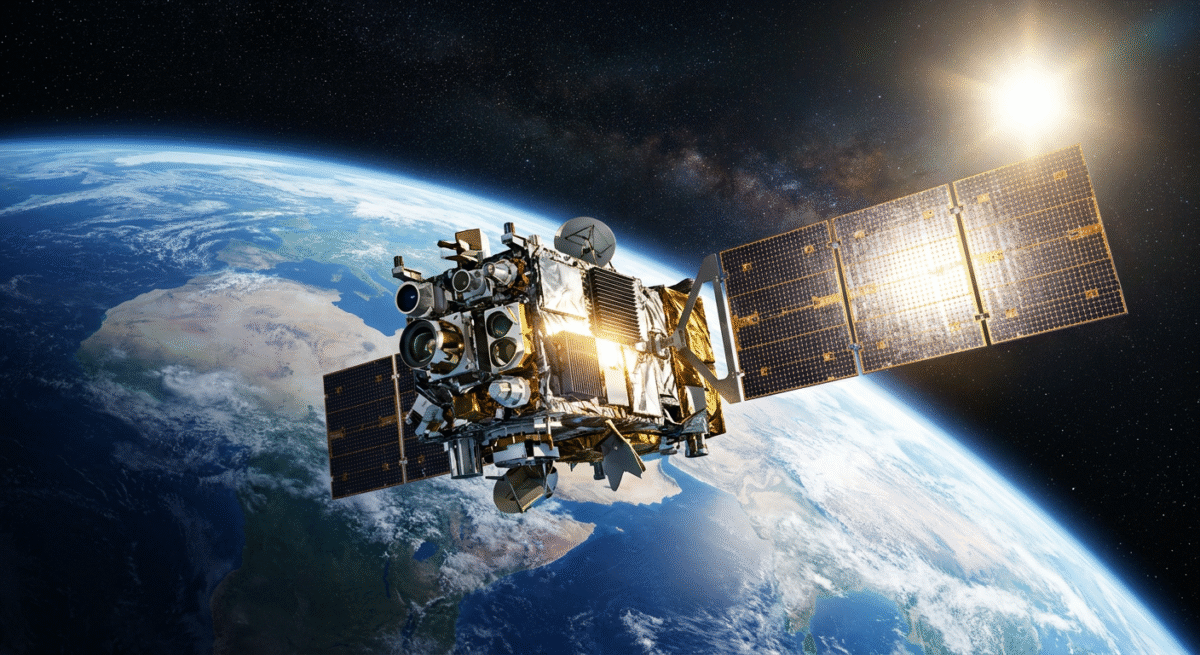
Precision in orientation determines how well a satellite performs. Power generation, communication stability, and mission accuracy all depend on how effectively a system tracks the sun.
Solar sensors play a central role in this process. They provide continuous data on the Sun’s position, supporting stable satellite operations. These principles also influence how solar sensors are designed for terrestrial environmental monitoring systems.
What is the purpose of a solar sensor in satellites?
Solar sensors help determine the position of the sun relative to the satellite. This supports orientation, energy generation, and stable system performance.
How are solar sensors used in environmental monitoring?
Solar sensors measure sunlight intensity and direction. This data supports solar energy systems, weather monitoring, and building automation.
What Are Solar Sensors in Satellite Systems?
Solar sensors are devices that detect the position and intensity of sunlight. In satellite systems, they help determine orientation relative to the sun. This information supports:
- Attitude control and positioning
- Solar panel alignment for energy generation
- Thermal management across spacecraft surfaces
They function as part of a broader sensing network that ensures the system remains aligned with operational requirements.
How Solar Sensors Measure Sunlight in Different Environments
Solar sensors measure sunlight using photodiodes or optical elements. These components detect light intensity across different angles and convert it into electrical signals.
Key working principles include:
- Differential light detection across multiple sensors
- Signal processing to calculate the sun angle
- Continuous feedback for onboard control systems
In space, sensors must operate without atmospheric filtering. This creates high-intensity exposure and requires stable calibration to maintain accuracy over time.
Types of Solar Sensors Used in Satellites
Different missions require different sensor configurations. Common types include
- Coarse Sun Sensors (CSS): Provide wide-angle detection for basic orientation
- Fine Sun Sensors (FSS): Deliver high-precision angle measurements for detailed control
- Analog Sun Sensors: Offer continuous output signals for smooth adjustments
- Digital Sun Sensors: Provide processed data for integration with onboard systems
Each type balances accuracy, complexity, and cost depending on mission needs.
Key Design Considerations for Space-Based Solar Sensors
Space environments introduce challenges that influence sensor design:
- Radiation Exposure: Components must resist degradation
- Temperature Extremes: Sensors must function across wide ranges
- Vacuum Conditions: Materials must remain stable without atmospheric pressure
- Long-Term Reliability: Maintenance is not possible after deployment
These factors require robust materials, precise calibration, and stable electronics.
How Solar Sensor Data Supports Satellite Operations
Solar radiation sensor outputs feed directly into control systems. This enables:
- Accurate solar panel positioning for energy efficiency
- Stabilized communication alignment
- Reduced power loss due to misalignment
- Improved mission consistency over time
Reliable data ensures that satellites maintain optimal positioning without constant manual intervention.
Comparing Space-Based vs Earth-Based Solar Sensors
Although the environments differ, the core measurement principles remain consistent.
Space-based sensors:
- Operate without atmospheric interference
- Require high radiation resistance
- Focus on orientation and navigation
Earth-based sensors:
- Measure solar radiation affected by weather conditions
- Support environmental monitoring and system control
- Operate in variable climates with maintenance access
Both systems rely on accurate sunlight detection, but their applications and constraints vary significantly.
How Solar Sensing Principles Translate to Terrestrial Applications
Solar sensing technology supports many ground-based applications:
- Solar energy systems for panel alignment
- Weather monitoring stations measuring solar radiation
- Building automation systems to optimize energy use
- Agricultural systems tracking sunlight exposure
These applications benefit from the same core principle: converting sunlight into actionable data.
Also Read:
How Solar Radiation Sensors Work
7 Applications Where Solar Radiation Sensors Improve Accuracy and Outcomes
Why Is Solar Radiation Measurement Important and How Does the A70H-UWS Help?
Understanding Solar Sensors Across Environments
Solar sensors remain essential across both space and terrestrial systems. Their ability to deliver consistent sunlight data supports reliable performance in demanding conditions. While design requirements vary, the underlying goal stays the same: accurate measurement that enables better control and efficiency.
Organizations evaluating environmental monitoring solutions often consider how solar sensing integrates with broader systems. Contact Comptus for solar-powered sensors that meet these needs by enabling accurate solar measurements in real-world applications.