Skip to the content
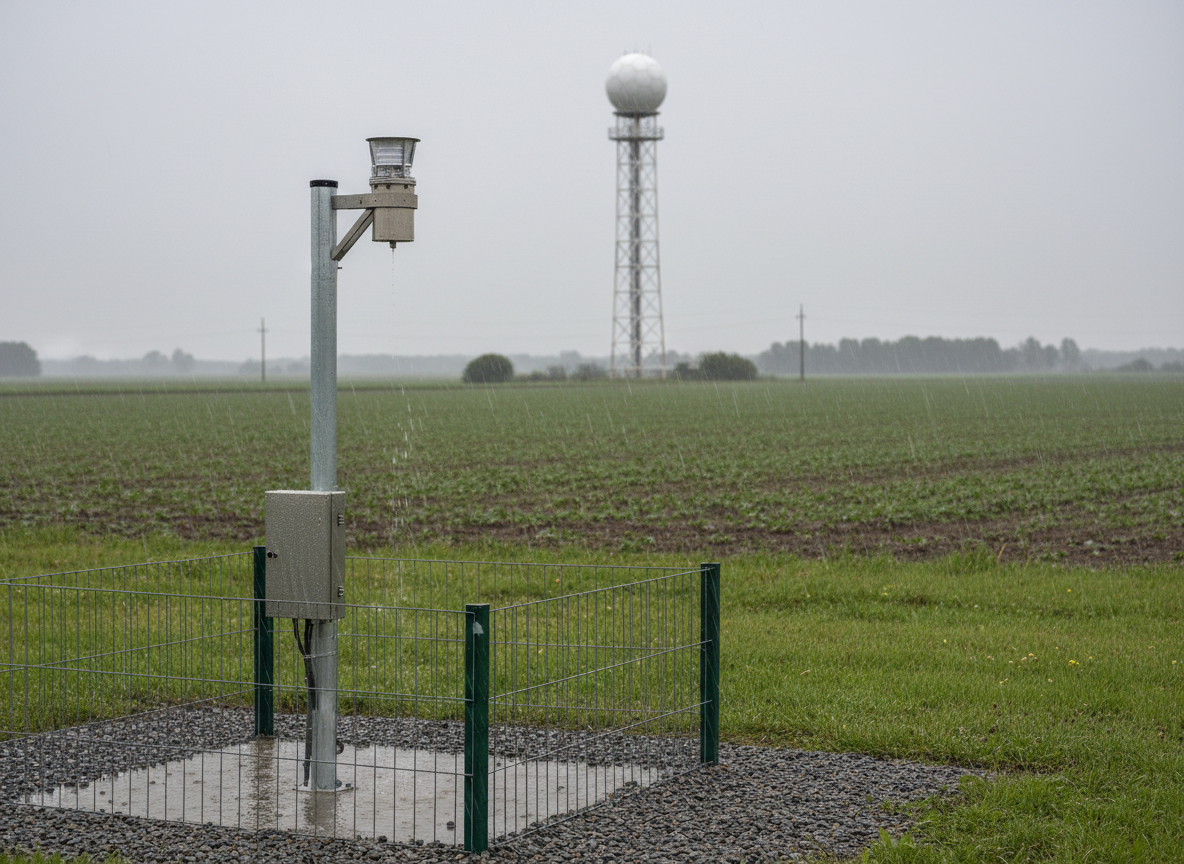
Rainfall data informs decisions affecting infrastructure, agriculture, water resources, and public safety. A small error in precipitation measurement can lead to flawed runoff calculations, inaccurate flood forecasting, or inefficient irrigation planning. Businesses that rely on rainfall data need measurements that are both precise at ground level and comprehensive across large areas.
Whether a business buys rain gauges or weather radars, both provide valuable insight. Using these instruments together strengthens confidence in rainfall measurement and reduces uncertainty in critical operations.
People Also Ask (PAAs)
Why are rain gauges important for radar rainfall estimates?
Rain gauges provide direct surface measurements that help calibrate radar estimates. This improves overall rainfall measurement accuracy.
Can radar replace rain gauges completely?
Radar provides broad coverage but does not measure rainfall directly at ground level. Rain gauges remain essential for calibration and validation.
How Rain Gauges Support Accurate Rainfall Measurement
Rain gauges measure precipitation by physically collecting rainfall at a specific location. This direct measurement makes them essential for validating surface rainfall amounts.
Most industrial rain gauges operate using one of the following methods:
- Tipping Bucket Rain Gauge: Rain collects in a small bucket. Once a set volume is reached, the bucket tips and sends a measurement signal. Each tip corresponds to a fixed amount of rainfall.
- Weighing Rain Gauge: The system continuously measures the weight of the collected water. This method improves accuracy during varying rainfall intensities.
- Optical Rain Gauge: Rainfall interrupts a light beam. The system calculates drop size and intensity in real time.
Key reasons to buy rain gauges include:
- Direct measurement of accumulated rainfall
- High accuracy at a fixed point
- Reliable data for long-term precipitation records
- Compatibility with remote monitoring systems
Rain gauges provide trusted surface data. However, they measure rainfall only at one physical location. That limitation makes broader area coverage challenging without multiple stations.
How Weather Radar Measures Rainfall
Weather radar measures rainfall by transmitting radio waves. These waves bounce off precipitation particles. The returned signal helps estimate rainfall intensity and movement across large regions.
Radar systems calculate:
- Rainfall intensity based on signal reflectivity
- Storm structure and movement
- Rainfall distribution across wide geographic areas
Unlike rain gauges, radar does not physically collect water. Instead, it estimates precipitation from reflectivity values. This approach provides broad coverage but introduces potential uncertainties.
Common radar limitations include:
- Overestimation during heavy storms
- Signal interference from terrain or buildings
- Reduced accuracy close to the ground
- Variability in drop size assumptions
Radar excels at tracking storm development and spatial patterns. It provides the broader context that individual rain gauges cannot capture on their own.
Why Rainfall Measurement Accuracy Improves When Both Are Used Together
Rain gauges and radar each solve different measurement challenges. One measures rainfall directly at the surface. The other estimates precipitation across broad areas.
Integrating these rainfall-measuring devices creates a more reliable rainfall dataset.
Rain gauges:
- Confirm actual rainfall totals
- Validate storm accumulation
- Provide calibration reference points
Radar:
- Maps the rainfall distribution
- Tracks storm progression
- Identifies intensity changes across regions
Together, they reduce uncertainty. Radar data are corrected using ground-based rain gauge measurements. Rain gauge networks gain spatial context from radar imagery.
This integration improves:
- Flood modeling accuracy
- Watershed management planning
- Agricultural water allocation
- Infrastructure risk assessment
Reliable rainfall measurement depends on both local precision and regional awareness.
The Role of Rain Gauges in Radar Calibration
Radar systems rely on reflectivity values to estimate rainfall rates. These values must align with actual surface measurements. Rain gauges provide the ground truth required for radar calibration.
Calibration works through:
- Comparing radar-estimated rainfall totals to rain gauge measurements
- Adjusting radar algorithms to reduce bias
- Updating rainfall intensity models based on local conditions
Without calibration, radar may consistently overestimate or underestimate rainfall in specific regions.
Businesses buy rain gauges online to:
- Detect localized rainfall variations
- Account for microclimates
- Improve radar rainfall conversion formulas
Calibration improves long-term rainfall records. It also strengthens predictive models used in flood forecasting and stormwater management.
Benefits of Combined Rain Gauge and Radar Data
Businesses that rely on rainfall data benefit from integrated systems.
Combined data provides:
- More accurate rainfall accumulation totals
- Improved detection of extreme precipitation events
- Better short-term forecasting validation
- Reduced measurement gaps
Operational benefits include:
- Enhanced stormwater infrastructure planning
- More precise irrigation scheduling
- Improved reservoir management
- Stronger environmental compliance reporting
Integrating these rainfall-measuring instruments reduces risk. When radar and rain gauge data align, confidence in rainfall measurement increases.
Also Read:
Importance of Accurate Precipitation Measurement
How to Minimize Errors While Measuring Precipitation
How Do Meteorologists Utilize Data from Precipitation Sensors in Forecasting?
Building Confidence in Rainfall Data Through Integration
Rainfall measurement accuracy influences operational safety, budgeting, and regulatory reporting. Relying on a single measurement method introduces avoidable uncertainty.
Rain gauges provide dependable surface data. Radar delivers regional context and storm tracking. When combined, they form a complete rainfall monitoring strategy.
Organizations seeking reliable rainfall measurement systems should evaluate:
- Local precipitation variability
- Required measurement precision
- Geographic coverage needs
- Integration capability with existing monitoring networks
Integrated rainfall systems support stronger planning, improved forecasting, and more resilient infrastructure decisions.
Organizations evaluating rainfall measurement systems can contact Comptus to review available precipitation measurement solutions to support integration requirements.