Skip to the content
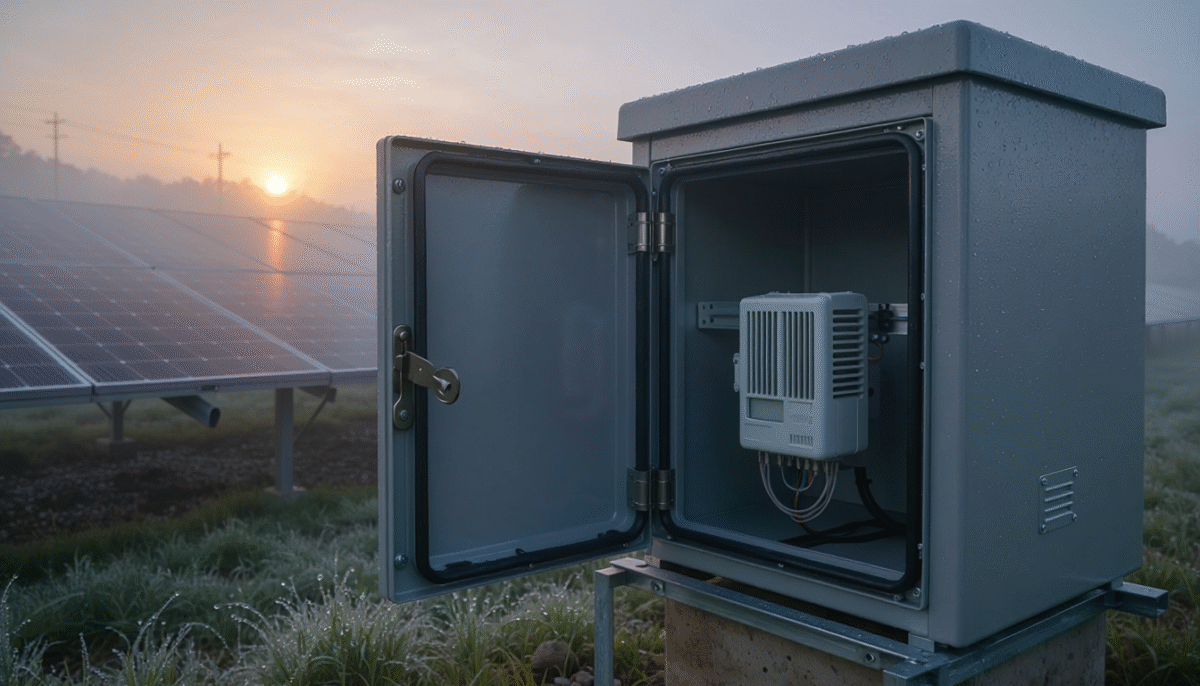
Accurate environmental data influences safety, performance, and operational efficiency across industries. Temperature shifts affect equipment stability. Humidity fluctuations impact materials, storage conditions, and process reliability. When conditions change rapidly, delayed data creates risk.
Real-time temperature and humidity sensors help organizations monitor environments continuously and respond with precision.
People Also Ask (PAAs)
How do temperature and humidity sensors work in real time?
Temperature and humidity sensors detect changes in thermal energy and moisture levels. Internal sensing elements convert these physical changes into electrical signals, which are processed and transmitted continuously to monitoring systems.
Why is real-time humidity monitoring important for businesses?
Real-time humidity monitoring helps prevent condensation, corrosion, and material degradation. It supports HVAC efficiency, protects equipment, and maintains consistent environmental conditions.
Why Real-Time Environmental Data Matters
Environmental conditions rarely stay constant. Temperature can rise due to equipment heat output. Humidity can increase due to ventilation imbalances or changes in weather. Without immediate data, businesses rely on assumptions rather than measurable inputs.
Real-time monitoring supports:
- Stable indoor climate control
- Protection of temperature-sensitive equipment
- Prevention of moisture-related damage
- Regulatory compliance in controlled environments
- Energy optimization in automated systems
When readings update instantly, corrective actions can begin without delay.
What Temperature and Humidity Sensors Measure
Temperature sensors measure thermal energy in the surrounding air. The output is in degrees Celsius or degrees Fahrenheit. These readings help identify overheated equipment, HVAC performance issues, or climate-control irregularities.
Humidity sensors measure the amount of moisture in the air. Most systems measure relative humidity, expressed as a percentage. Relative humidity compares current moisture levels to the maximum amount of water vapor the air can hold at a given temperature.
Together, temperature and humidity sensors provide a complete picture of atmospheric conditions. Some integrated atmospheric sensors also include barometric pressure measurement to enhance environmental analysis.
Core Components Inside Temperature and Humidity Sensors
Modern temperature and humidity sensors contain several internal elements that work together:
- Thermistors or RTDs: Detect temperature changes by measuring resistance changes.
- Capacitive Humidity Elements: Measure moisture by detecting changes in electrical capacitance due to humidity.
- Signal-Conditioning Circuits: Convert raw readings into stable electrical outputs.
- Protective Housing: Shields sensing elements from dust, debris, and environmental interference.
Radiation shields are often used in outdoor installations to prevent solar heating from distorting temperature readings. Proper shielding ensures accuracy.
Each component plays a role in maintaining measurement stability, repeatability, and response speed.
How Sensors Capture Data in Real Time
Air temperature and humidity sensors continuously sample the surrounding air. The sensing elements detect micro-level environmental changes. These changes alter the sensor’s electrical characteristics.
The process typically follows these steps:
- Air passes across the sensing element.
- Changes in temperature or moisture alter resistance or capacitance.
- The sensor converts these changes into electrical signals.
- Internal electronics process the signal instantly.
Because sampling occurs at frequent intervals, data reflect current conditions rather than historical averages. This continuous capture supports time-sensitive environments such as data centers and industrial automation facilities.
Data Transmission From Sensor to System
Capturing real-time environmental data is only part of the process. Transmission determines how quickly systems respond.
Temperature and relative humidity sensors typically transmit signals using:
- Analog outputs
- Digital communication protocols
- Integrated transmitters for direct system connection
These outputs feed into building automation systems, environmental monitoring networks, or industrial control panels. Once integrated, data can trigger automated responses such as ventilation adjustments, cooling activation, or alarm notifications. Reliable transmission prevents data lag and ensures operational continuity.
Where Real-Time Temperature and Humidity Data Is Used
Businesses rely on accurate atmospheric sensors in environments such as:
- Data centers protect servers and networking equipment
- Manufacturing facilities maintain process stability
- Renewable energy installations monitoring equipment enclosures
- Controlled storage environments maintain material stability
- Building automation systems optimizing HVAC performance
In each case, real-time measurement supports operational reliability and risk reduction.
Common Challenges in Real-Time Environmental Measurement
Despite advanced sensor technology, challenges remain:
- Improper sensor placement near heat sources
- Lack of radiation shielding outdoors
- Calibration drift over time
- Condensation affecting sensing elements
- Electrical interference in industrial environments
Addressing these challenges requires careful installation, periodic calibration, and protective mounting solutions. Proper setup preserves long-term measurement accuracy.
Also Read:
Understanding the Most Important Weather Measuring Instruments in Use Today
How Weather Sensors are Revolutionizing Municipal Wastewater and Stormwater Infrastructure
The Benefits of Weather Sensors on Commercial Buildings: Improving Safety, Efficiency, and Building Automation Systems
Turning Environmental Data Into Action
Raw data alone does not improve operations. Actionable insights come from integrating temperature and humidity sensors into control systems.
Real-time data can:
- Trigger automated HVAC adjustments
- Activate moisture control systems
- Alert facility managers to environmental deviations
- Support compliance documentation
- Improve energy efficiency tracking
When environmental conditions remain within defined parameters, equipment performance stabilizes and operational risk declines.
For organizations seeking reliable atmospheric measurement solutions, Comptus offers a range of temperature and relative humidity sensors for continuous environmental monitoring. Contact Comptus to support informed environmental monitoring and system design decisions.