Skip to the content
Wind data can influence operational safety, system efficiency, and regulatory compliance. Even small measurement errors can affect planning, reporting, and performance.
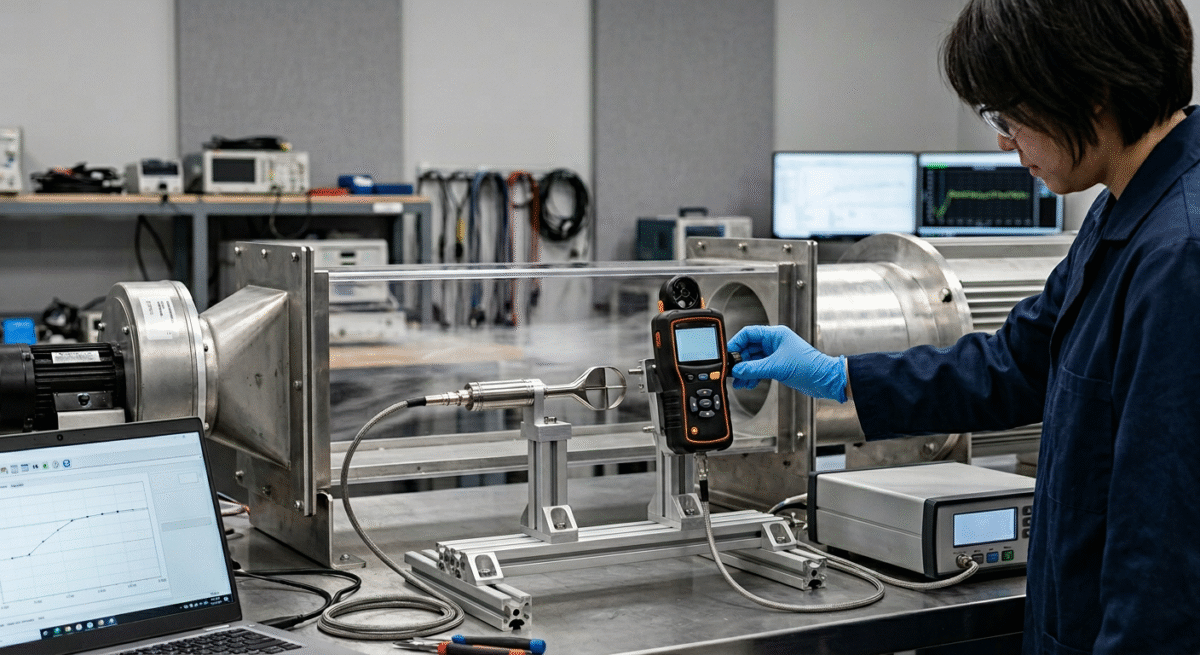
Calibrating a handheld anemometer ensures wind speed and direction accuracy by comparing readings to a known standard. In most cases, it requires a calibrated wind tunnel or a controlled fan with a reference instrument. Regular calibration, within defined error tolerance limits, supports consistent and reliable data.
What is the most accurate method to calibrate an anemometer?
Wind tunnel calibration is considered the most accurate method because it uses controlled airflow and reference standards to validate readings.
Can handheld anemometers be calibrated in the field?
Yes, field calibration can be done using controlled fans or reference instruments, though it may offer lower precision than laboratory methods.
Why Calibration Accuracy Matters in Wind Measurement
Accurate calibration creates dependable wind data across operations. Without it, measurement errors can lead to:
- Incorrect safety assessments
- Inefficient system performance
- Unreliable environmental analysis
- Compliance risks
Calibration keeps readings aligned with real-world conditions. This allows data to support confident decision-making.
What Is Handheld Anemometer Calibration?
Anemometer calibration verifies and adjusts a device against a known reference. This process ensures the device measures wind accurately across different speeds.
Key aspects include:
- Comparing readings with a certified reference instrument
- Identifying deviations across multiple test points
- Adjusting outputs to match standard values
Calibration may also involve creating calibration curves that map measured values against actual wind speeds.
How Handheld Anemometers Measure Wind
Handheld anemometers measure airflow using different sensing methods
- Mechanical systems use rotating cups or vanes
- Thermal sensors measure airflow through heat loss
- Ultrasonic sensors detect wind through sound wave changes
Over time, environmental exposure and handling can affect these mechanisms. Calibration helps restore measurement accuracy.
When Should a Handheld Anemometer Be Calibrated?
Calibration should follow a structured schedule and specific triggers:
- Routine intervals, often annually
- Exposure to dust, moisture, or extreme temperatures
- After impact, repair, or extended use
- When readings appear inconsistent
Accuracy can gradually decrease, making regular calibration essential to maintain performance.
Step-by-Step Process to Calibrate a Handheld Anemometer
A structured process ensures consistent calibration results:
1. Preparation and Inspection
- Confirm that vanes or sensors move freely
- Check for debris or damage
- If the device does not spin at low speeds, repair may be required
2. Establish a Controlled Environment
- Use a calibrated wind tunnel for high precision
- Alternatively, use a controlled fan setup for field calibration
- Ensure stable and steady airflow
3. Compare with a Reference Standard
- Measure wind speed alongside a certified reference instrument
- Record readings at multiple speeds such as 2000, 1500, 1000, 750, 500, and 250 fpm
- Use these points to build a calibration curve
4. Apply Calibration Adjustments
- Adjust device settings to correct deviations.
- For digital devices, set offsets through the console or application
- Ensure proper orientation when applying directional offsets
5. Verify Calibration Accuracy
- Repeat measurements after adjustments.
- Confirm alignment across all test points.
6. Document Calibration Results
- Record calibration data, date, and adjustments
- Maintain logs for tracking and compliance.
7. Perform Field Validation
- Hold the device away from the body to avoid airflow interference
- Average readings over 10–20 seconds for stable results
Key Calibration Techniques
Different methods can be used depending on the required accuracy and available resources:
- Wind Tunnel Calibration (High-Precision): Uses controlled airflow to calibrate readings against a standard. This method must follow the relevant established protocols.
- Controlled Fan Method (Field Method): Uses a steady fan and a reference anemometer to compare readings at various speeds.
- Digital or Console Calibration: Adjusts offsets in smart devices to correct directional or measurement deviations.
- Moving Vehicle Method: Simulates known wind speeds by moving the device at a constant speed in calm conditions.
Each technique offers a balance between precision and practicality.
Best Practices for Maintaining Calibration Accuracy
Consistent practices help maintain accuracy between calibration cycles of handheld wind meters:
- Store the device in a clean, dry environment
- Avoid exposure to extreme temperatures
- Handle equipment carefully
- Inspect sensors regularly
- Follow recommended calibration intervals
Proper handling and storage reduce the likelihood of measurement drift.
Also Read:
How Regular Maintenance Extends the Life of Industrial Anemometers
When Simplicity Wins: A Real-World Rebuttal to Propeller Anemometers
How to Measure Wind Speed: A Beginner’s Guide to Using Anemometers
How Accurate Calibration Supports Better Decision-Making
Accurate calibration supports consistent wind measurement and reliable data. A structured approach, combined with proper maintenance and adherence to standards, helps maintain accuracy over time. This supports:
- Improved safety planning
- Consistent system performance
- Reliable environmental monitoring
- Stronger compliance reporting
When calibration is maintained, data becomes a dependable input for operational decisions.
Organizations seeking dependable environmental monitoring instruments can contact Comptus for high-speed anemometers that deliver accurate measurements and long-term reliability.