Skip to the content
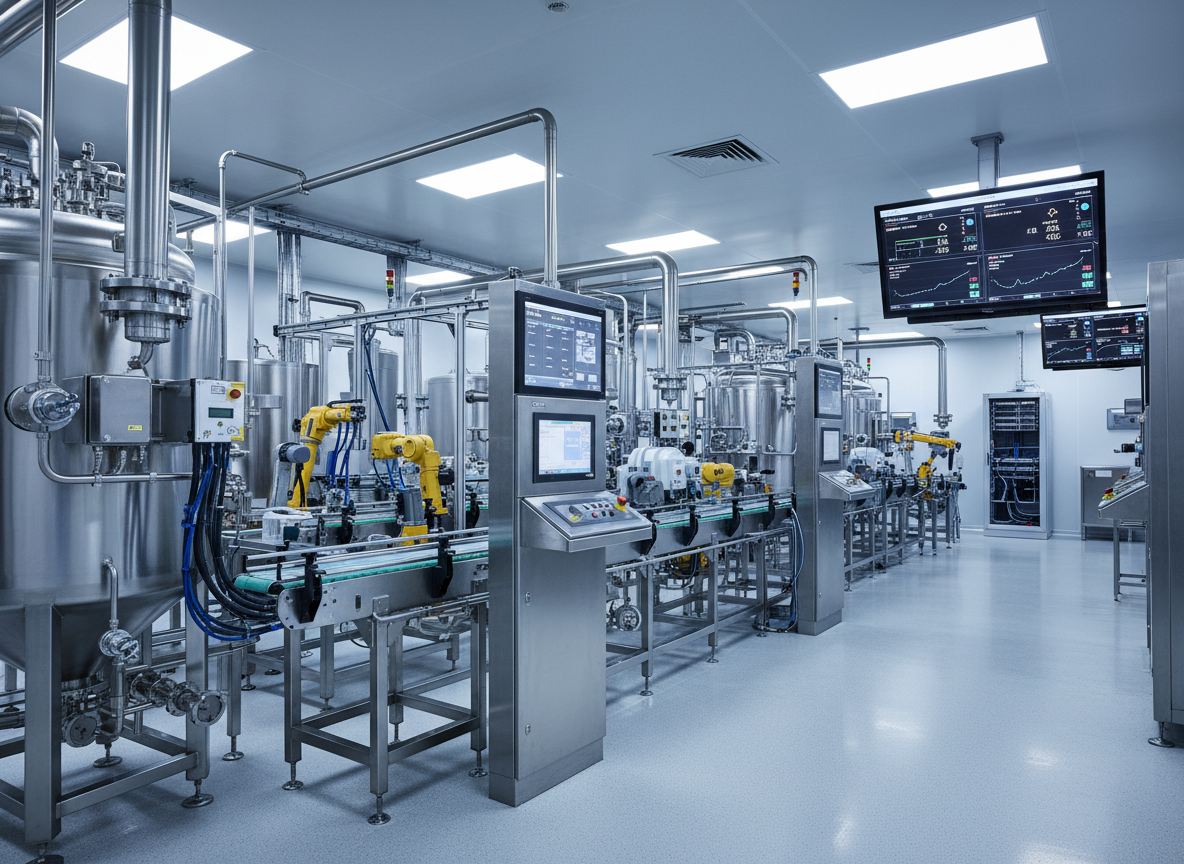
Industrial operations depend on accurate environmental monitoring to maintain efficiency, safety, and process stability. Facilities managing automation systems or climate-sensitive operations often operate in environments where temperature fluctuations and humidity changes directly affect performance. Under these conditions, selecting the best temperature and humidity sensors becomes a critical operational decision.
Consumer-grade sensors may perform adequately in standard indoor settings. However, industrial facilities require instruments capable of maintaining accuracy under sustained exposure to heat, condensation, vibration, and chemical contaminants. High-precision monitoring systems help facilities maintain stable operations while supporting long-term compliance and reliability goals.
Why Industrial Facilities Prioritize High-Precision Temperature and Humidity Sensors
Managing Grid Reliability and Extreme Climate Variability
Industrial facilities face increasing pressure from unstable environmental conditions and changing climate patterns. Rapid temperature shifts and fluctuating humidity levels can affect equipment performance, electrical systems, and process consistency.
In power generation and industrial automation environments, inaccurate environmental readings may contribute to unstable operating conditions. Consumer-grade devices often struggle under prolonged exposure to harsh temperatures or high-moisture conditions. High-precision environmental instruments help maintain reliable monitoring where operational continuity is essential.
Transitioning to Precision Instrumentation for Facility Automation
Many facilities are moving toward more advanced monitoring infrastructure to support automation and compliance requirements. Platinum resistance thermometers are commonly used because they provide stable, accurate temperature measurements over extended periods.
Continuous monitoring is also becoming more important in regulated environments where environmental conditions must remain within defined operating ranges. Automation systems rely on consistent data inputs to support process control, equipment protection, and operational efficiency.
Critical Performance Standards for Industrial Temperature and Humidity Sensors
Controlling Condensation and Thermal Gradients in Plants
Condensation remains a major challenge in industrial facilities. Excess moisture can affect sensor performance, increase drift, and reduce long-term measurement stability.
Heated probe designs help maintain more consistent readings in condensation-prone environments. Proper sensor placement also plays an important role in reducing errors in humidity calculations caused by localized thermal gradients or restricted airflow.
Facilities operating in steam-intensive or temperature-variable environments often prioritize sensor configurations designed to minimize moisture-related inaccuracies.
Ensuring Ingress Protection and Chemical Resistance
Industrial facilities frequently expose environmental sensors to dust, washdowns, chemicals, and airborne contaminants. Under these conditions, ingress protection becomes an important factor in long-term sensor reliability.
Durable housings and corrosion-resistant materials help support stable operation in harsh environments. Facilities may also require calibration traceability against recognized national standards to maintain confidence in measurement consistency over time.
Important performance considerations include:
- Ingress protection ratings
- Chemical resistance
- Housing durability
- Calibration stability
- Long-term environmental tolerance
Evaluating Sensor Performance in Harsh Industrial Environments
Response Time and Operational Accuracy
Fast response times help industrial systems react more effectively to changing environmental conditions. Delayed environmental readings may affect automation timing, equipment protection logic, and process control performance.
Sensor performance should always be evaluated against operational tolerances and environmental demands rather than relying only on general specifications. Stable accuracy over long operating cycles often becomes more important than short-term laboratory performance alone.
Dew Point vs Relative Humidity: Choosing the Right Parameter
Different industrial applications require different environmental measurements. Dew point monitoring is commonly used in low-moisture environments where condensation prevention is critical.
Relative humidity measurement remains suitable for broader environmental monitoring applications. However, applications such as compressed air systems, leak detection, and feedwater control often require more precise parameter selection to support accurate environmental management.
Understanding the operational objective helps facilities determine which measurement approach aligns best with system requirements.
Total Cost of Ownership and Long-Term Reliability
Reducing Maintenance and Calibration Intervals
High-quality industrial sensors help reduce the frequency of servicing and unplanned downtime. Stable calibration performance supports longer operational intervals between maintenance cycles, helping facilities improve long-term efficiency.
Poor-quality sensors may require more frequent recalibration or replacement, increasing maintenance costs and operational interruptions over time.
Supporting Integration with Industrial Monitoring Systems
Modern facilities increasingly rely on centralized monitoring and automation platforms. Environmental sensors must integrate smoothly with these systems to support efficient data collection and control.
Digital outputs improve accessibility to real-time environmental data and simplify integration with industrial monitoring infrastructure. Compatibility with automation platforms also helps facilities expand monitoring capabilities as operational requirements evolve.
Also Read:
The Importance of Temperature and Humidity Sensors
Does Relative Humidity Readings Depend on Changing Temperature?
Importance of Temperature Measurement and Various Devices Used for It
Moving Toward More Reliable Environmental Monitoring Systems
Industrial monitoring continues to shift toward precision-driven environmental control strategies. Accurate humidity and temperature data support better process stability, equipment protection, and compliance management across demanding operating environments.
Selecting the best temperature and humidity sensors requires evaluating environmental exposure, monitoring objectives, integration needs, and long-term maintenance expectations. Facilities that align sensor selection with operational requirements are better positioned to maintain reliable and efficient monitoring systems.
Contact Comptus to review high-precision environmental sensor solutions for industrial monitoring.