Skip to the content
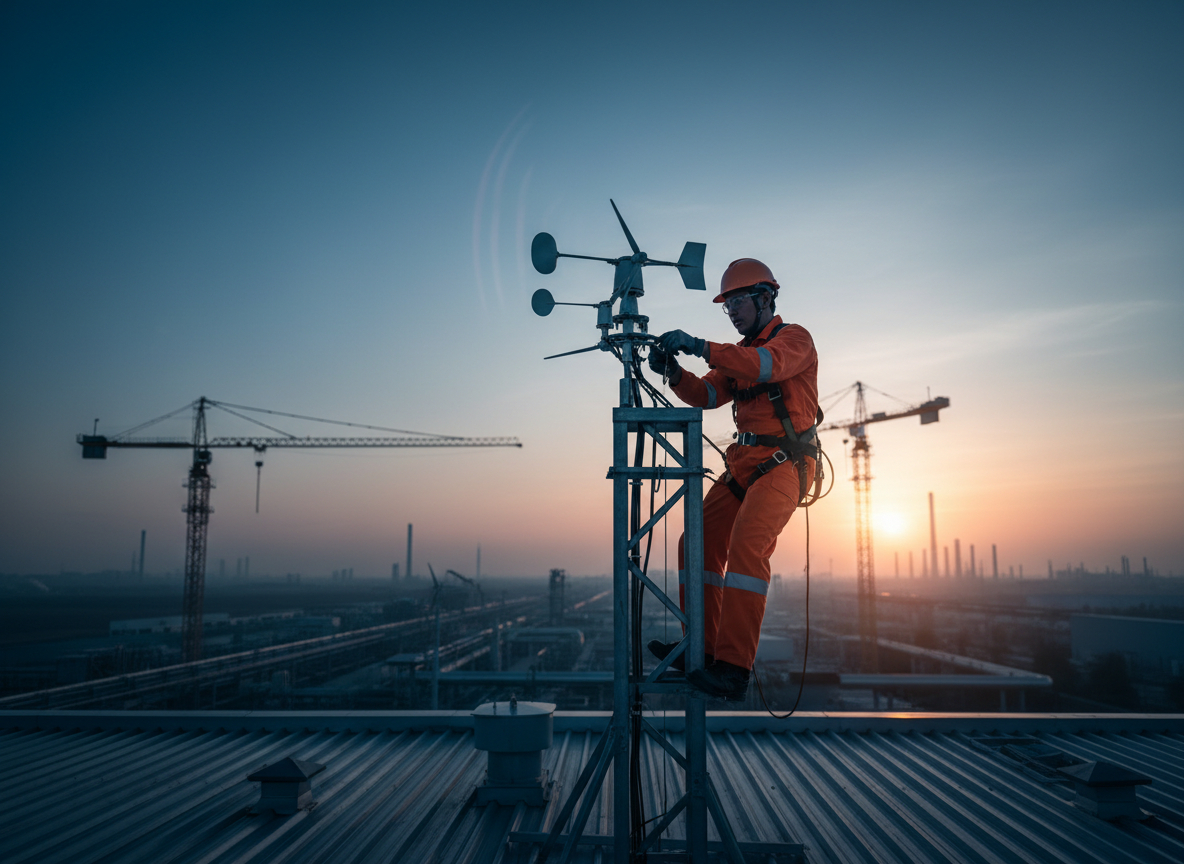
Wind data influences operational safety, equipment performance, and regulatory compliance across industrial sites. Construction zones pause lifting operations when wind speeds exceed specified thresholds. Renewable energy facilities monitor airflow to assess turbine efficiency. Building automation systems adjust ventilation based on outdoor conditions. In all these settings, industrial anemometers play a critical role.
Without regular maintenance, even the best industrial anemometers can lose accuracy, suffer premature wear, and require early replacement. A structured maintenance approach protects both performance and long-term investment.
Why Anemometer Maintenance Matters in Industrial Environments
Industrial environments expose equipment to dust, vibration, temperature swings, moisture, and airborne debris. Over time, these conditions affect moving parts, sensors, and electrical connections.
An unmaintained anemometer may:
- Report inconsistent wind speed readings
- Respond slowly to gusts
- Drift from calibration standards
- Experience bearing or component failure
Inaccurate wind measurement can disrupt project planning, equipment safety systems, and performance tracking. Regular maintenance helps ensure that industrial anemometers continue to deliver reliable data under demanding conditions.
Common Causes of Wear and Failure in Industrial Anemometers
Industrial anemometers typically use mechanical cup assemblies or ultrasonic technology. Both designs face environmental stress.
Common causes of wear include:
- Dust and particulate buildup in bearings
- Corrosion from humidity or industrial pollutants
- Ice accumulation in cold climates
- UV exposure can degrade external materials over time
- Electrical surges that affect signal output
Mechanical units may experience bearing friction or imbalance. Even non-mechanical models can suffer from sensor contamination or wiring degradation. Identifying these risks early allows maintenance teams to reduce long-term damage.
How Regular Maintenance Preserves Measurement Accuracy
Wind measurement systems must remain aligned with performance specifications. Over time, small mechanical changes or environmental residue can shift readings outside acceptable tolerances.
Routine inspection and calibration help:
- Confirm wind speed accuracy
- Detect early component wear
- Maintain a stable signal output
- Prevent data drift in monitoring systems
Accurate readings support safe crane operations, effective building ventilation strategies, and reliable renewable energy assessments. Maintenance ensures that data remains actionable rather than misleading.
Key Maintenance Practices for Industrial Anemometers
A preventive maintenance program does not require complex procedures. It requires consistency.
Key practices include:
- Visual Inspection: Check for cracks, loose hardware, debris accumulation, and physical damage.
- Cleaning Sensor Components: Remove dirt, insects, and contaminants that may interfere with rotation or airflow detection.
- Bearing Evaluation (for mechanical models): Inspect for unusual resistance or noise. Replace worn bearings before failure occurs.
- Electrical Connection Checks: Confirm wiring is stable, connectors are sealed, and signal transmission is secure.
- Calibration Verification: Compare readings against reference standards or manufacturer specifications.
These steps reduce unexpected downtime and extend equipment usability.
Maintenance Frequency Based on Application and Location
Maintenance schedules vary depending on operating conditions. In most cases, environmental exposure determines inspection intervals.
- High-dust construction sites may require quarterly inspections.
- Coastal-adjacent industrial zones exposed to humidity may require more frequent corrosion checks.
- Remote renewable energy sites may follow semi-annual or annual service intervals with remote diagnostics.
- Building automation installations in controlled environments may require less frequent maintenance.
The harsher the environment, the more frequent the inspection schedule should be. A documented maintenance log improves consistency and supports compliance requirements.
How Preventive Maintenance Extends Anemometer Service Life
Using the best industrial anemometers represents a long-term investment in monitoring. Replacing units prematurely increases capital costs and interrupts data continuity.
Preventive maintenance extends service life by:
- Reducing internal friction and mechanical strain
- Preventing corrosion from spreading
- Detecting electrical issues before system failure
- Preserving calibration stability over time
Well-maintained units often operate reliably for many years. Structured care reduces emergency repairs and protects operational planning.
Also Read:
Practical Guide to Calibrating a Handheld Anemometer
How to Measure Wind Speed: A Beginner’s Guide to Using Anemometers
When Simplicity Wins: A Real-World Rebuttal to Propeller Anemometers
Maintenance as a Strategy, Not a Task
Maintenance should not be treated as a reactive obligation. It functions as a strategic component of asset management. Consistent inspection, calibration, and documentation improve data integrity and reduce risk.
Businesses evaluating industrial wind monitoring solutions should consider not only product specifications but also long-term service planning. Contact Comptus for more information on effective maintenance for industrial anemometers.