Skip to the content
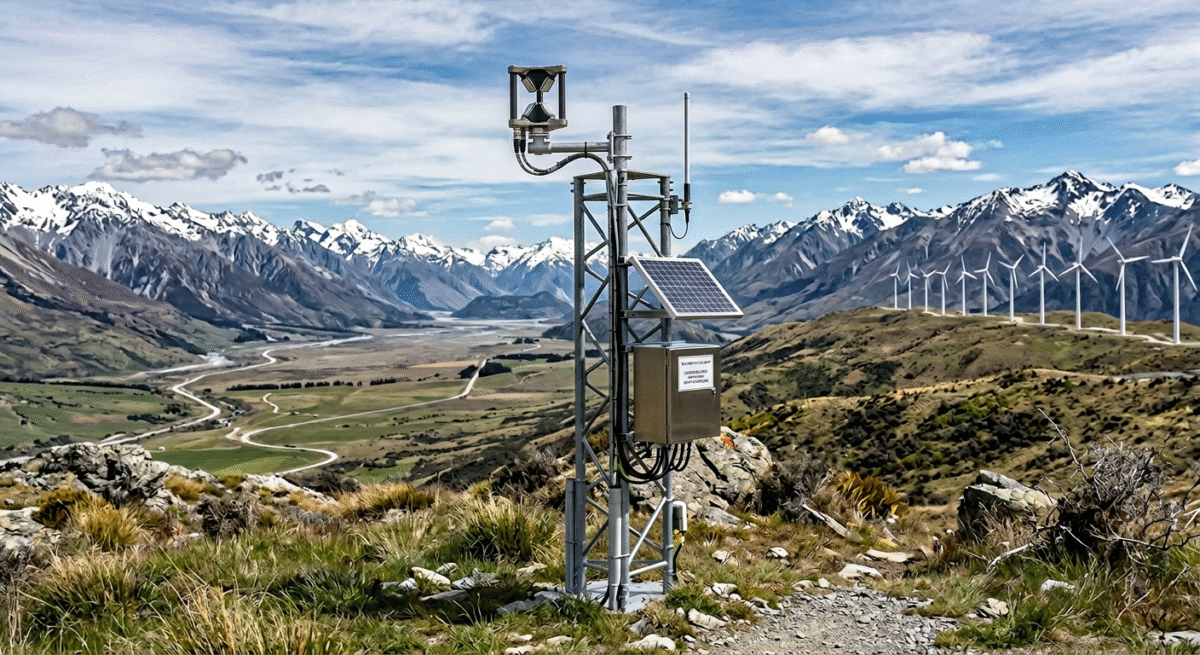
Wind behavior affects infrastructure safety, environmental monitoring, and operational planning across many industries. Construction sites, renewable energy facilities, research stations, and automated building systems rely on accurate wind measurements to guide decisions.
Traditional wind speed measuring devices and technologies often depend on mechanical components such as rotating cups or vanes. These systems perform reliably under many conditions, but can wear out over time due to moving parts.
Ultrasonic wind sensors address this challenge using a different approach. Instead of relying on rotation or mechanical movement, these sensors measure wind through sound waves and time-based calculations. This approach improves durability and enables consistent wind measurement in demanding environments.
Organizations seeking reliable environmental monitoring often evaluate ultrasonic systems when precision and long-term stability matter. Many advanced solutions now incorporate ultrasonic technology to deliver accurate wind speed data across industrial and environmental monitoring applications.
How does an ultrasonic anemometer measure wind speed?
Ultrasonic anemometers measure wind speed by comparing the travel time of sound waves moving with and against the wind between sensor transducers.
Why are ultrasonic wind sensors more reliable than mechanical ones?
Ultrasonic wind sensors contain no moving parts, which reduces wear and allows consistent measurement accuracy over long operating periods.
What Is an Ultrasonic Wind Sensor?
An ultrasonic wind sensor measures wind speed and direction by transmitting ultrasonic sound pulses between transducers. These transducers act as both speakers and receivers.
The device typically contains several pairs of transducers arranged in a geometric pattern. Each pair sends and receives high-frequency sound waves across a fixed distance.
When wind moves through this measurement path, it changes how quickly sound travels between the sensors. The instrument measures these changes in travel time and converts them into wind speed and direction data.
Key characteristics of ultrasonic wind sensors include:
- No rotating parts
- Minimal mechanical wear
- Fast response to wind changes
- Stable long-term performance
- High sampling rates
Because the system depends on physics rather than moving mechanisms, ultrasonic wind sensors maintain reliable performance.
The Science Behind Ultrasonic Wind Speed Measurement
Ultrasonic wind measurement relies on the principle that sound travels faster when moving with the wind and slower when traveling against it.
Inside the wind-speed measuring device, transducers emit ultrasonic pulses along a fixed path length. The system measures how long each pulse takes to travel between the transducers.
Two signals are measured:
- Sound travels with the wind
- Sound traveling against the wind
Wind slightly alters the travel time of each signal. By comparing the difference between these two measurements, the sensor calculates wind speed.
This process happens many times per second, allowing the sensor to detect small fluctuations in airflow.
The measurement cycle typically includes:
- Transmission of ultrasonic pulses
- Detection of the pulse by the receiving transducer
- Precise timing of signal travel
- Calculation of airflow speed using time differences
Because this approach measures time differences at extremely small scales, the sensor can detect subtle changes in wind movement.
Why Ultrasonic Sensors Deliver High Precision
Precision wind measurement requires stability, repeatability, and minimal interference. Ultrasonic technology provides advantages that support these requirements. Several factors contribute to the high precision of ultrasonic sensors.
Absence of Mechanical Friction
Traditional wind instruments rely on bearings and rotating components. Over time, friction and wear can affect measurement accuracy. Ultrasonic sensors contain no moving components. This eliminates mechanical resistance that might slow response time or introduce measurement errors.
High Sampling Frequency
Ultrasonic sensors can measure wind conditions multiple times per second. High sampling rates enable the detection of rapid wind changes, such as gusts or turbulence. This capability improves measurement accuracy in dynamic environments.
Stable Calibration
Mechanical sensors may drift as components wear or accumulate debris. Ultrasonic systems maintain stable calibration because measurement relies on fixed distances and electronic timing.
Multi-Axis Measurement
Many ultrasonic sensors measure wind across multiple axes simultaneously. This allows the sensor to determine both:
- Wind speed
- Wind direction
The result is a more complete and precise representation of airflow conditions.
Factors That Influence Ultrasonic Measurement Accuracy
Although ultrasonic wind anemometers and sensors offer high precision, certain factors can influence measurement accuracy. Understanding these factors helps ensure reliable data collection.
1. Sensor Placement
Proper placement is essential for accurate wind readings. Sensors should be installed in locations where airflow is not obstructed by structures or equipment. Buildings, towers, and large objects can create turbulence that distorts measurements.
2. Environmental Conditions
Extreme weather conditions may influence ultrasonic signal transmission. Factors that can affect performance include:
- Heavy precipitation
- Ice accumulation
- Extreme temperature variations
- Dust or airborne debris
Many industrial sensors incorporate heating systems or protective designs to maintain measurement stability under these conditions.
3. Mounting Stability
Sensors should be mounted securely to prevent vibration or movement. Even small structural movements can introduce measurement variability if the sensor shifts position.
4. Maintenance Practices
Ultrasonic sensors require less maintenance than mechanical systems. However, periodic inspection ensures that transducers remain clean and unobstructed. Routine checks help maintain measurement reliability over long periods.
When Ultrasonic Wind Sensors Are the Right Choice
Ultrasonic sensing instruments are valuable where maintenance access is limited or measurement accuracy is critical. Many organizations evaluate ultrasonic systems when operating conditions include:
- Remote installations
- Harsh weather exposure
- Continuous monitoring requirements
- Locations where mechanical wear is a concern
These sensors perform well in installations where reliability and consistent data collection are more important than mechanical simplicity.
In many cases, ultrasonic technology provides a long-term measurement solution that reduces maintenance requirements while maintaining stable accuracy.
Also Read:
How Accurate Wind Direction Indicators Support Climate Research
Best Practices to Harness Wind Direction Indicators in Industrial Settings
How Wind Direction Indicators Improve Safety and Efficiency on Construction Sites
Precision Through Physics, Not Mechanics
Wind measurement technology continues to evolve as industries demand more reliable environmental data. Ultrasonic sensors represent a shift from mechanical measurement toward physics-based sensing.
By measuring differences in sound travel time, ultrasonic wind sensors detect airflow conditions with high sensitivity and stability. The absence of moving components reduces mechanical wear and improves long-term reliability.
This combination of durability and precision makes ultrasonic sensors suitable for many environmental monitoring and industrial measurement applications.
Organizations evaluating wind monitoring systems often review ultrasonic technology when accurate and consistent wind speed measurement is essential.
Organizations evaluating wind measurement instruments may contact Comptus for sensing technologies designed for industrial environmental monitoring.