Skip to the content
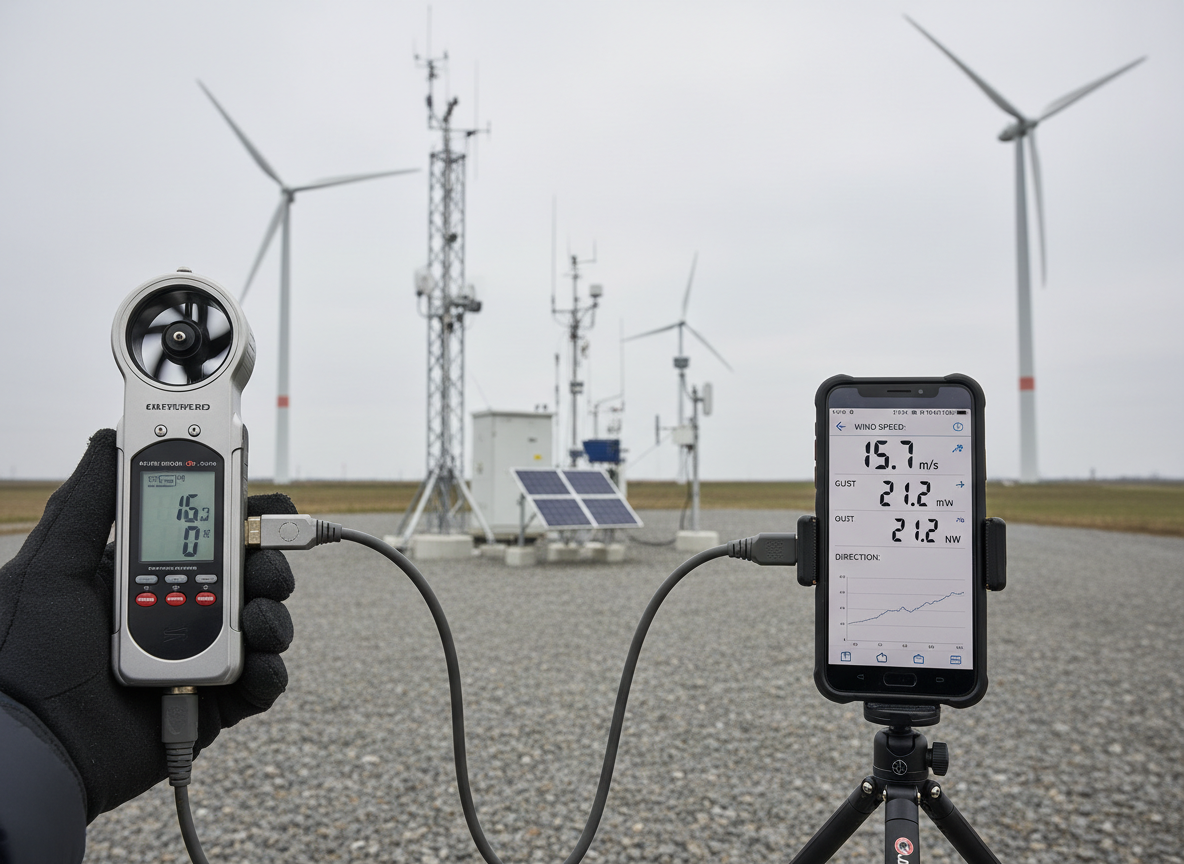
Accurate wind measurement has become increasingly important for field operations that depend on fast environmental assessments. Construction teams, facility managers, environmental researchers, and maintenance crews often need reliable wind data while working in changing outdoor conditions. Carrying bulky monitoring equipment is not always practical, especially during temporary inspections or mobile operations.
A handheld anemometer paired with a smartphone offers a more flexible approach to field wind measurement. This combination improves mobility while simplifying how wind data is captured, reviewed, and shared across teams.
What is a handheld anemometer used for?
A handheld anemometer is used to measure wind speed in field environments. It supports applications such as construction safety monitoring, environmental studies, facility inspections, and outdoor system evaluations.
Can a smartphone accurately measure wind speed?
Smartphones alone do not provide reliable wind speed measurements because they lack dedicated sensing hardware. A portable wind meter connected to a smartphone improves accuracy and supports professional and industrial wind monitoring tasks.
Why Mobile Wind Measurement Matters in Field Conditions
Field teams increasingly rely on real-time environmental data to support operational decisions. Wind conditions can affect safety procedures, equipment performance, inspection schedules, and environmental reporting requirements.
Smartphone integration makes wind measurement easier to manage during field activities. Instead of manually recording readings, teams can store and organize data directly through mobile applications. This improves efficiency while reducing reporting delays.
Portable wind meters also support faster responses when conditions change unexpectedly. Immediate access to wind data helps teams make informed operational adjustments without having to return to fixed monitoring stations.
What Enables Wind Measurement Through a Smartphone
Smartphones do not measure wind speed on their own. They function primarily as interfaces for external sensing devices.
A handheld wind meter captures wind data using dedicated sensing technology. The device then transmits information wirelessly to a smartphone via Bluetooth or app-based connectivity.
Once connected, the smartphone application can:
- Display live wind readings
- Store measurement history
- Organize field reports
- Share data across teams
The sensor itself remains responsible for measurement accuracy. The smartphone improves usability, accessibility, and reporting efficiency.
How Portable Wind Meters Work with Mobile Devices
Portable wind meters combine compact sensor technology with wireless communication features. The sensor measures airflow conditions while the smartphone handles visualization and data management.
The process typically works as follows:
- The wind meter captures wind speed data
- The sensor transmits readings wirelessly
- The smartphone application receives the data
- Readings are displayed instantly for field review
Many mobile-connected systems also support:
- Real-time wind speed monitoring
- Data logging for documentation
- Simplified calibration settings
- Configuration management
This setup allows teams to conduct measurements without relying on large monitoring systems or manual reporting methods.
Limitations of Using Smartphones Alone for Wind Measurement
Smartphones do not contain dedicated wind-sensing hardware capable of producing reliable industrial measurements. While some applications attempt to estimate airflow using microphones or internal components, accuracy varies significantly.
Environmental interference can also affect smartphone-only measurements. Factors such as handling position, ambient noise, and device limitations reduce consistency.
As a result, standalone smartphone wind measurements are generally unsuitable for:
- Industrial operations
- Construction safety assessments
- Environmental monitoring
- Professional reporting requirements
A dedicated handheld anemometer remains necessary for accurate field measurements.
Benefits of Using a Portable Wind Meter with a Smartphone
Improved Accuracy and Reliability
Dedicated sensors provide more stable and repeatable measurements than smartphone-only methods. This improves reliability during field operations where environmental conditions may shift rapidly.
Portable wind meters are designed specifically for outdoor measurement tasks, making them suitable for professional environments.
Enhanced Mobility for Field Operations
Compact handheld devices are easy to transport between locations. Their portability supports:
- Temporary inspections
- Outdoor maintenance work
- Mobile environmental assessments
- Field-based troubleshooting
Teams can quickly capture measurements without installing permanent equipment.
Real-Time Data Access and Sharing
Mobile applications provide immediate visibility into measurement data. Readings can often be shared instantly across operational teams, improving communication and reporting speed.
Digital storage also simplifies recordkeeping for compliance documentation and environmental reporting.
Common Use Cases Across Industries
Portable wind meters paired with smartphones support a wide range of industrial and environmental applications.
Construction Site Monitoring
Field teams monitor wind conditions to support safer lifting operations and outdoor work planning.
Environmental Field Studies
Researchers collect wind data during environmental assessments and weather-related monitoring activities.
Facility Maintenance Operations
Maintenance teams use portable measurement tools to evaluate ventilation systems, airflow conditions, and outdoor operational environments.
Key Considerations When Selecting a Portable Wind Meter
Choosing the right device depends on operational requirements and field conditions.
Important considerations include:
- Measurement accuracy and operating range
- Bluetooth and app compatibility
- Battery life during extended field work
- Durability for outdoor environments
- Compatibility with reporting workflows
Evaluating these factors helps improve long-term usability and operational efficiency.
Also Read:
What Is a Weather Meter and How Can You Use It?
Practical Guide to Calibrating a Handheld Anemometer
Steps to Ensure Accurate Calibration of a Handheld Anemometer
Smarter Wind Measurement for Mobile Environments
Portable wind meters, combined with smartphones, continue to improve the way field teams capture and manage environmental data. Mobile connectivity simplifies reporting, while dedicated sensing technology supports reliable measurements in changing conditions.
As field operations become more mobile, practical wind measurement solutions help support faster communication, safer decisions, and more efficient workflows. Reviewing Comptus’s available solutions can help organizations identify the right handheld anemometer for mobile operations and professional reporting needs.
For applications requiring extended measurement ranges and more advanced environmental monitoring, contact Comptus for a high-speed anemometer that supports broader operational requirements.